Introduction: Beyond Component Placement
In Printed Circuit Board Assembly (PCBA), most manufacturers focus heavily on AOI (Automated Optical Inspection) to check if components are present and soldered correctly. But what about the board’s surface integrity?
Defects like solder mask peeling, residual adhesive, fingerprints, or UV glue splashing into restricted zones are often missed by standard component-focused AOI. Yet, these issues can lead to delamination, corrosion, or downstream assembly failures.
Relying on manual visual checks for these subtle surface defects is inefficient, especially when a production line handles multiple product variants. Operators struggle to switch context between different board layouts, leading to escapes.
The Challenge: 5 Variants, 1 Standard
The project goal was to deploy an AI-driven inspection system to replace manual surface checks. The catch? While traditional AOI struggles with high-mix production, the UnitX AI-Driven Inspection System supports 5 distinct PCBA product variants seamlessly.
The Defect Spectrum:
The defects ranged from cosmetic to critical electrical failures:
- Surface Contamination: Fingerprints, residual adhesive, and foreign particles.
- Process Errors: UV glue in restricted areas and part collisions.
- Structural/Electrical: Solder mask peeling, delamination, and broken traces.
The client needed a modular solution capable of successfully imaging and detecting all these defect types reliably. By using a single unified model, they aimed to support rapid product changeovers and avoid the nightmare of reprogramming traditional algorithms for every single product version.
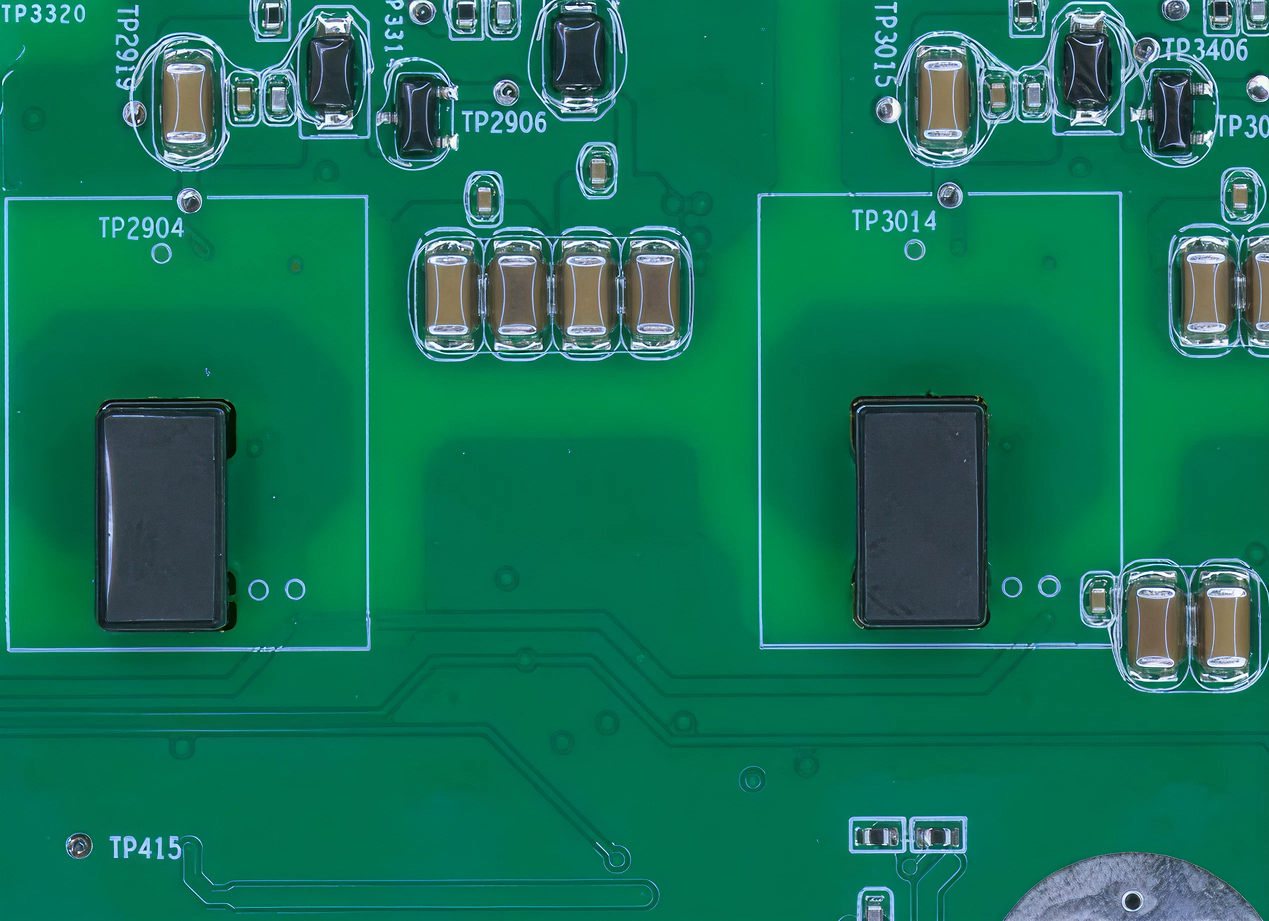
PCBA surface inspection requires detecting defects on the front, back, and edges of the board.
The Solution: 360° Coverage, Unified Intelligence
UnitX delivered a fully automated machine with a modular architecture designed for high-mix production.
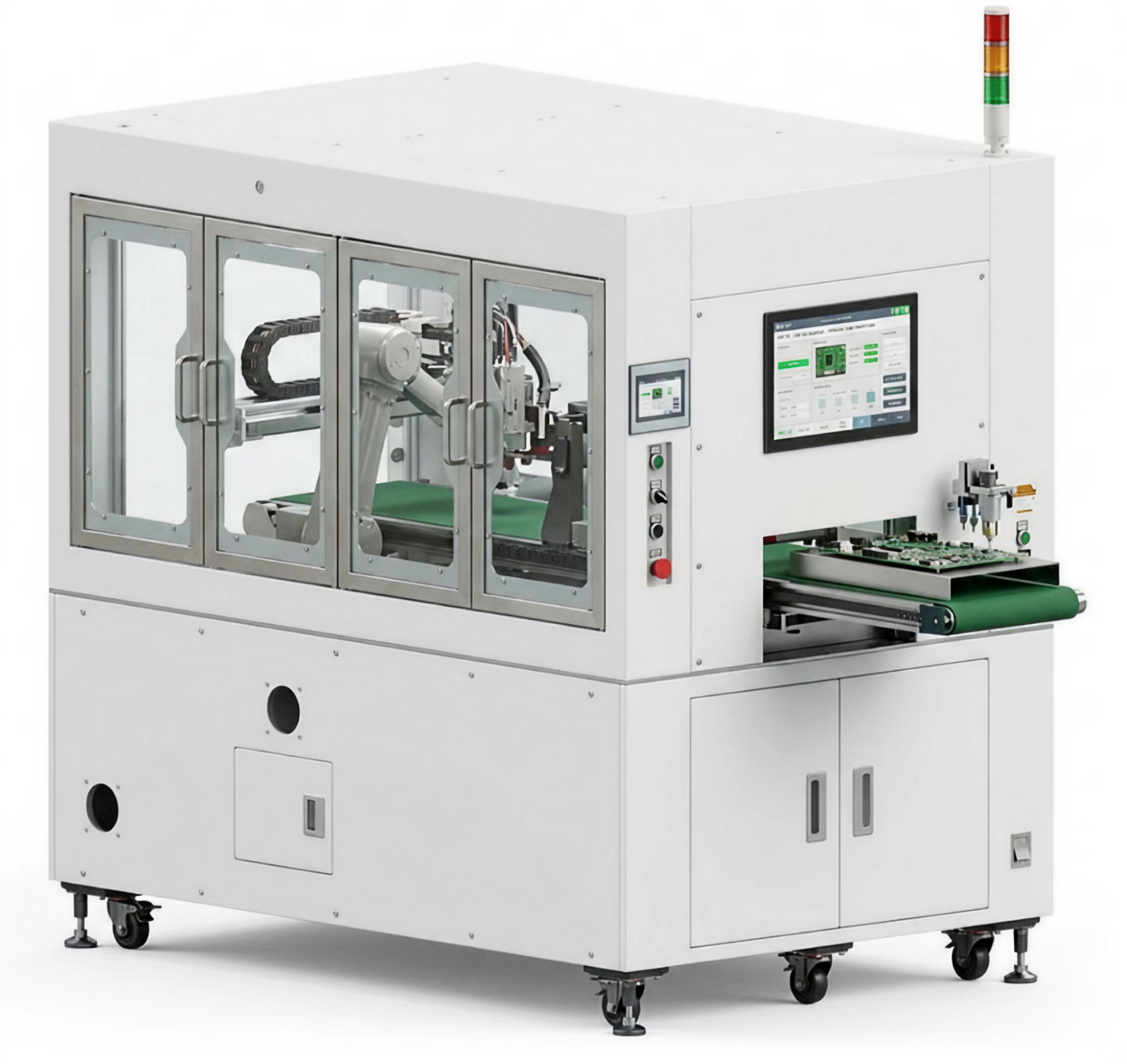
The UnitX inspection station covers the front face, four side edges, connector exterior, and back of the PCBA.
Key Innovations:
-
- Dynamic Robotics: A 6-axis robotic arm dynamically positions a single UnitX OptiX camera to capture high-resolution data from every required angle.
- 360° Coverage: The system actively inspects the PCBA’s front, back, four side edges, and connector exteriors to completely eliminate traditional blind spots.
- Unified Intelligence: Instead of juggling different algorithms, a single AI model natively inspects all 5 distinct product variants.
- Instant Changeovers: The combination of modular hardware and unified software guarantees rapid model changeovers without the need for complex reprogramming.
Results: Speed, Simplicity, and Scale
The unified AI approach transformed the client’s quality control into a high-speed, highly reliable automated process.
- Robust Quality Gate: The system achieved a False Acceptance Rate of ≤ 0.5%, acting as a near-perfect filter for critical electrical defects and surface contamination alike.
- Operational Precision: With a False Rejection Rate of ≤ 5%, the AI maintains high precision across all 5 product variants, significantly reducing the manual re-inspection burden for operators.
- Smart Factory Reliability: By maintaining an Overall Equipment Effectiveness (OEE) of ≥ 95%, the solution ensures that high-quality manufacturing is supported by consistent, world-class machine uptime.
- Seamless Line Integration: The system is engineered to replace manual labor and improve inspection efficiency, providing the high-throughput performance required for modern intelligent factories.
- The Bottom Line: Transitioning to UnitX AI-Driven Vision Inspection successfully standardized quality across multiple product categories while driving down the costs associated with manual oversight.
Defect Visualization
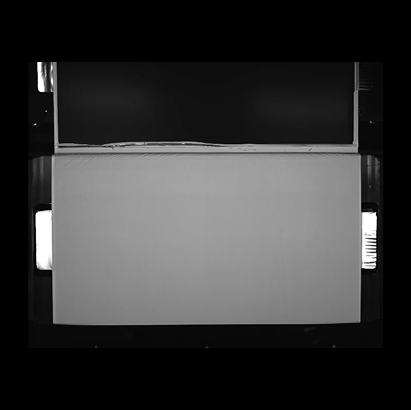
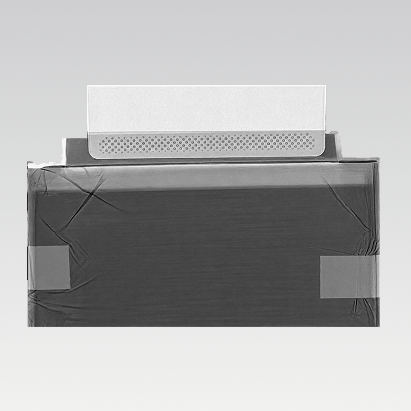
The images below showcase the diversity of defects the AI can handle—from human errors like Fingerprints to mechanical issues like Component Collisions.
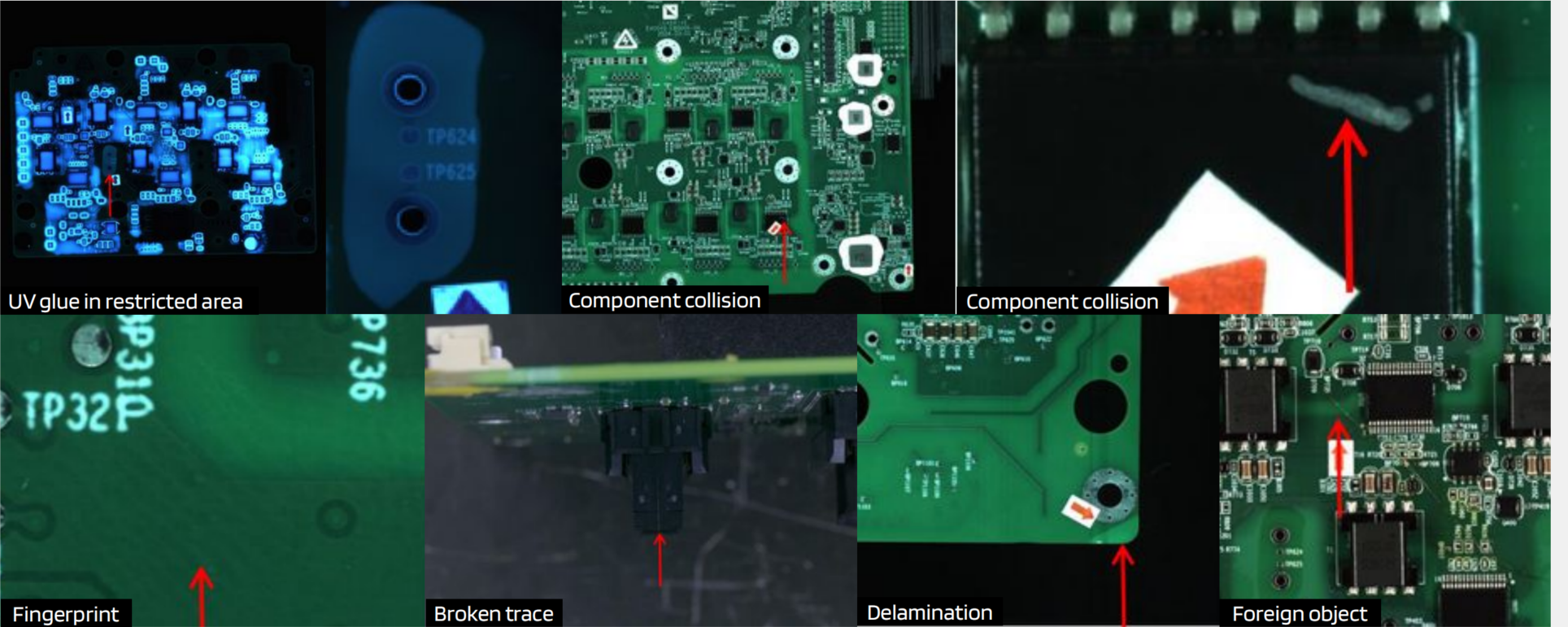
UnitX AI identifies a wide range of defects, including broken traces, component collisions, and surface contamination.
Conclusion
Managing quality across multiple PCBA variants doesn’t have to mean managing multiple inspection headaches. UnitX’s Unified Inspection Model proves that one smart AI system can handle the variety, complexity, and speed of modern electronics manufacturing.
Need to inspect multiple products on one line?
Contact UnitX to simplify your QC process.