Introduction: Stopping Engine Failures Before Assembly
A compromised cylinder gasket guarantees engine failure. Because these metal-rubber components operate under extreme thermal and mechanical stress, even microscopic surface defects can lead to fluid leaks, blown engines, and massive warranty claims. UnitX prevents these costly field failures by automating the visual inspection process. By detecting material anomalies on the line, the system ensures that only flawless, fully compliant gaskets move forward to engine assembly.
The Challenge: Multiple Variants, Inconsistent Manual Results
The customer relied entirely on manual visual inspection to evaluate multiple, visually similar metal-rubber gasket variants. To improve product consistency, guarantee sealing reliability, and dramatically reduce labor dependency, the manufacturer set out to automate the entire surface inspection station.
The Defect Spectrum: The AI system had to detect a wide range of surface anomalies across all gasket variants:
- Material Failures: Dents, cracks, deformation, tearing, and exposed metal (structural integrity risks).
- Process Defects: Over-molding, insufficient glue, coating defects, burn marks, weld lines, adhesive residues, foreign objects, and contamination (assembly and sealing failures).
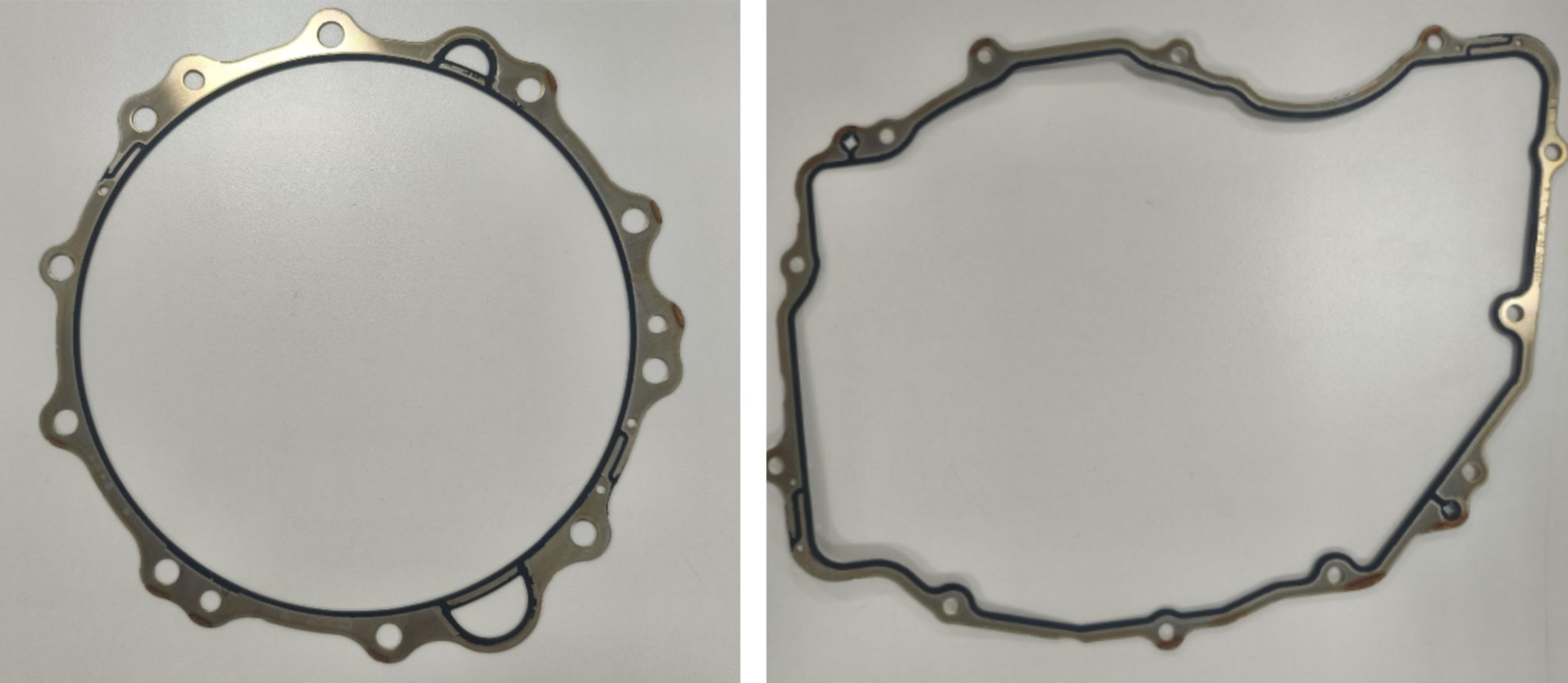
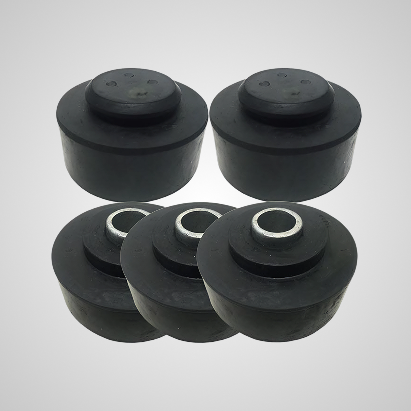
Rubber-to-metal bonded gasket: multiple visually similar variants share the same inspection station, requiring AI to differentiate between normal material variation and actual defects.
The Solution: Robot-Assisted Dual-Sided Inspection
The inspection cycle begins when the operator places the workpiece on the fixture plate and steps outside the light curtain safety zone. Pressing the start button activates a robotic arm, which follows a predefined path to image the entire front side of the gasket before stopping. The operator then manually flips the workpiece and presses the start button once more to initiate the back-side inspection cycle.
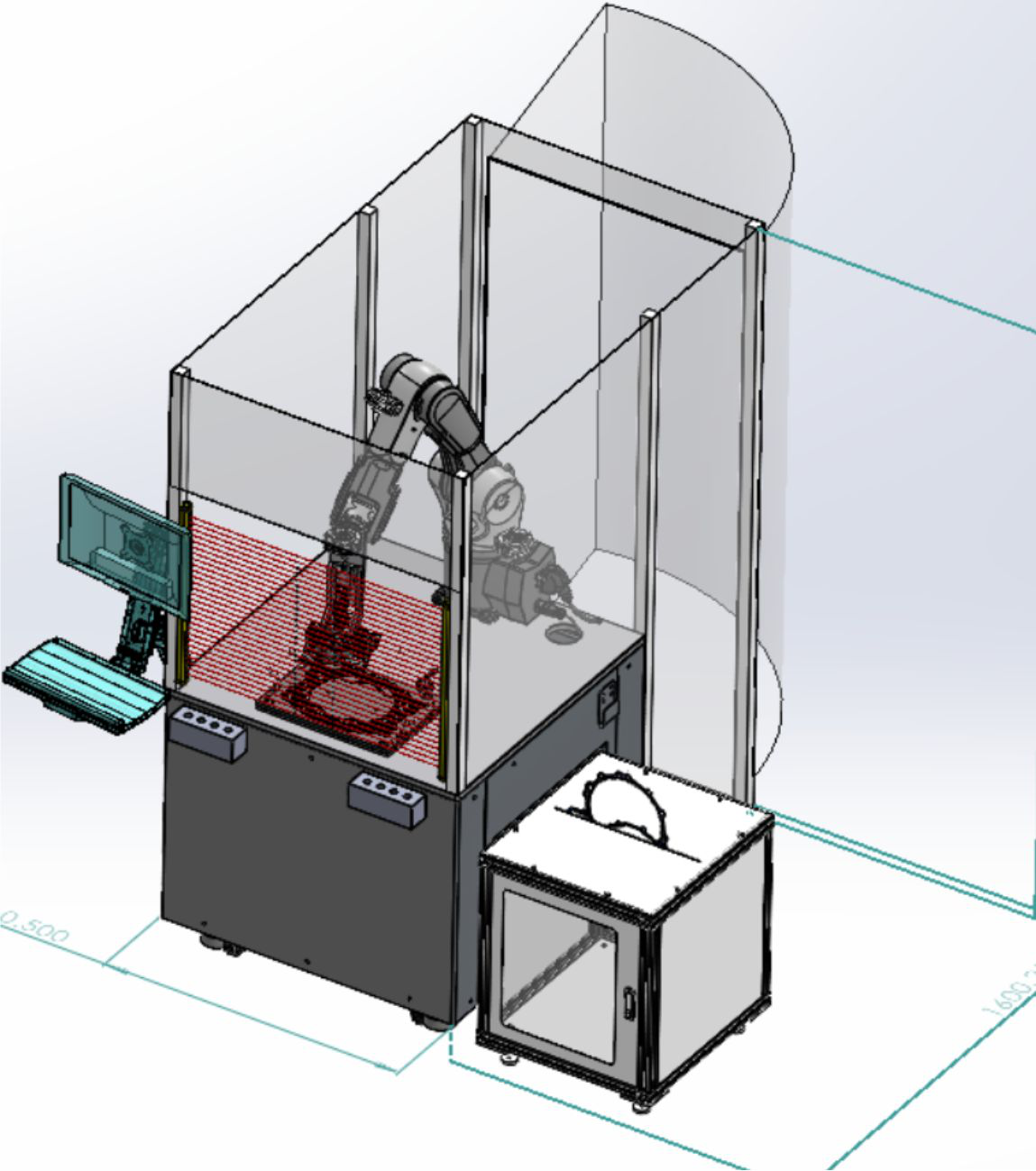
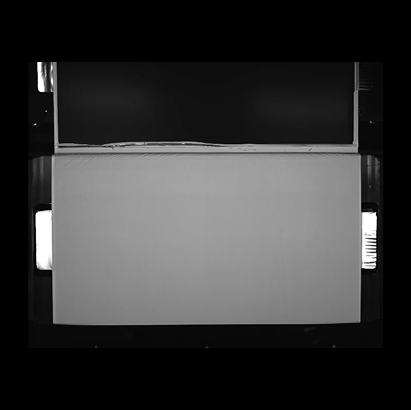
A Robot-mounted OptiX vision system follows a predefined path over the gasket surface, capturing all regions at consistent imaging conditions for reliable AI inference.
Vision System Components:
- Imaging System (OptiX × 1): A robot-mounted vision unit that maintains consistent lighting and focus along its predefined path, capturing high-fidelity surface data for both front and back scans.
- AI Detection System (CorteX × 1): A unified AI platform managing model training and real-time inference. It processes the data and provides an OK/NG decision instantly.
Results: Zero Escapes, Workforce Optimized
- Perfect Quality Gate: A 0% False Acceptance Rate ensures no defective gaskets ever reach the next assembly process.
- Minimal Scrap: A False Rejection Rate of ≤1% guarantees that perfectly good parts are not mistakenly wasted.
- Workforce Optimization: Each deployed system frees up 4 operators from tedious visual checks, significantly lowering overhead while upgrading inspection reliability.
Defect Visualization
The images below show AI-detected defects annotated with precise location markers across the gasket surface.
- “Tearing” / “Dent”: Structural damage to the rubber or metal layer.
- “Insufficient glue”: Bonding failure that compromises the metal-rubber interface.
- “Burn marks” / “Weld line” / “Adhesive residues” / “Over-molding”: Process anomalies flagged and classified by the AI in real time.
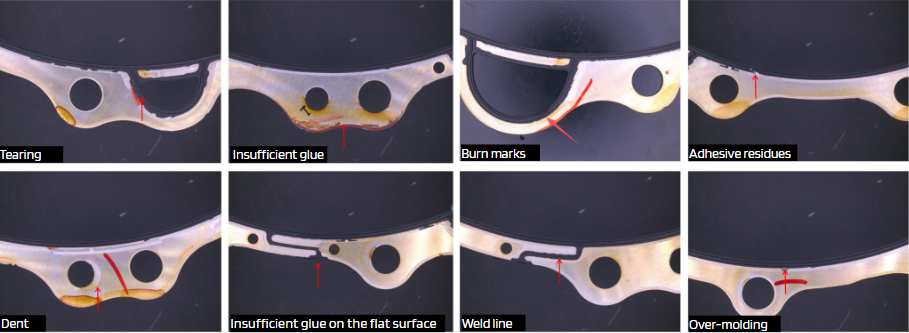
UnitX AI detected each defect with precise location and classification, logging results to the production system for full traceability.
Conclusion
A leaking gasket in the field costs far more than a rejected part on the line. UnitX’s automated inspection closes the quality gap that manual inspection leaves open — zero escapes, consistent standards across all variants, and meaningful labor savings with every system deployed.
Automate your gasket inspection line.
Contact UnitX to discuss surface defect inspection for metallic gaskets.