Introduction: The Breaker That Must Not Break
The Molded-Case Circuit Breaker (MCCB) is the first line of defense in low-voltage distribution systems. It protects buildings and equipment from overloads and short circuits.
Inside this rugged black box, the Soldered/Welded Joints are critical. They provide both mechanical fixation and electrical continuity. If a joint has “insufficient solder fill” or “burn damage,” it creates a weak point. Under the stress of frequent switching or a high-current overload, that weak point can fail internally, leading to a catastrophic loss of power or even a fire hazard.
Ensuring these joints are perfect is non-negotiable. But inspecting them in high-volume production is difficult because the joints are often recessed or positioned at awkward angles within the breaker housing.
The Challenge: Seeing the Joint Clearly
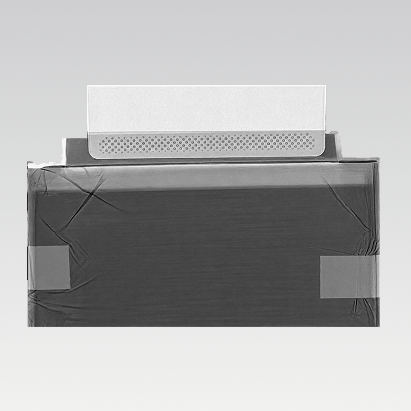
The project goal was to automatically detect welding defects on the solder face of large MCCBs (up to 140x140x40 mm).
The Defect Trifecta:
The system needed to reliably identify and classify three critical failure modes:
- Unfilled Solder: A complete lack of solder material, resulting in a total disconnect.
- Insufficient Solder Fill: A weak or incomplete connection that might pass a basic electrical test but could fail under the stress of an actual overload.
- Burn & Heat Damage: Scorching or burn marks that indicate process control issues during the welding phase, compromising the integrity of the joint.
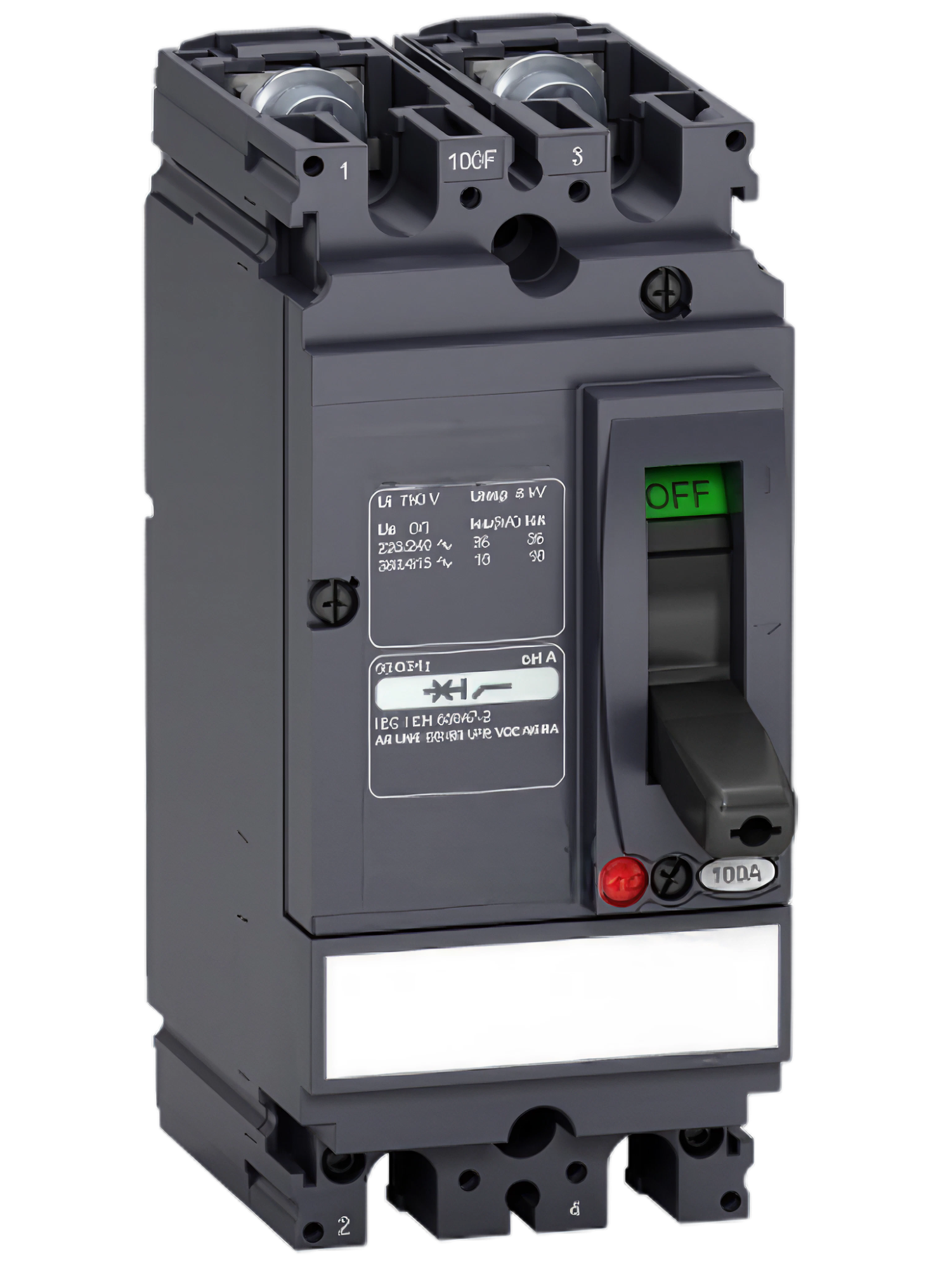
MCCBs require robust solder joints to handle high electrical loads safely.
The Solution: Geometry-Aware Imaging
You can’t inspect what you can’t see. To get a clear view of the solder surface, UnitX engineered a specific optical geometry tailored to the product’s internal structure.
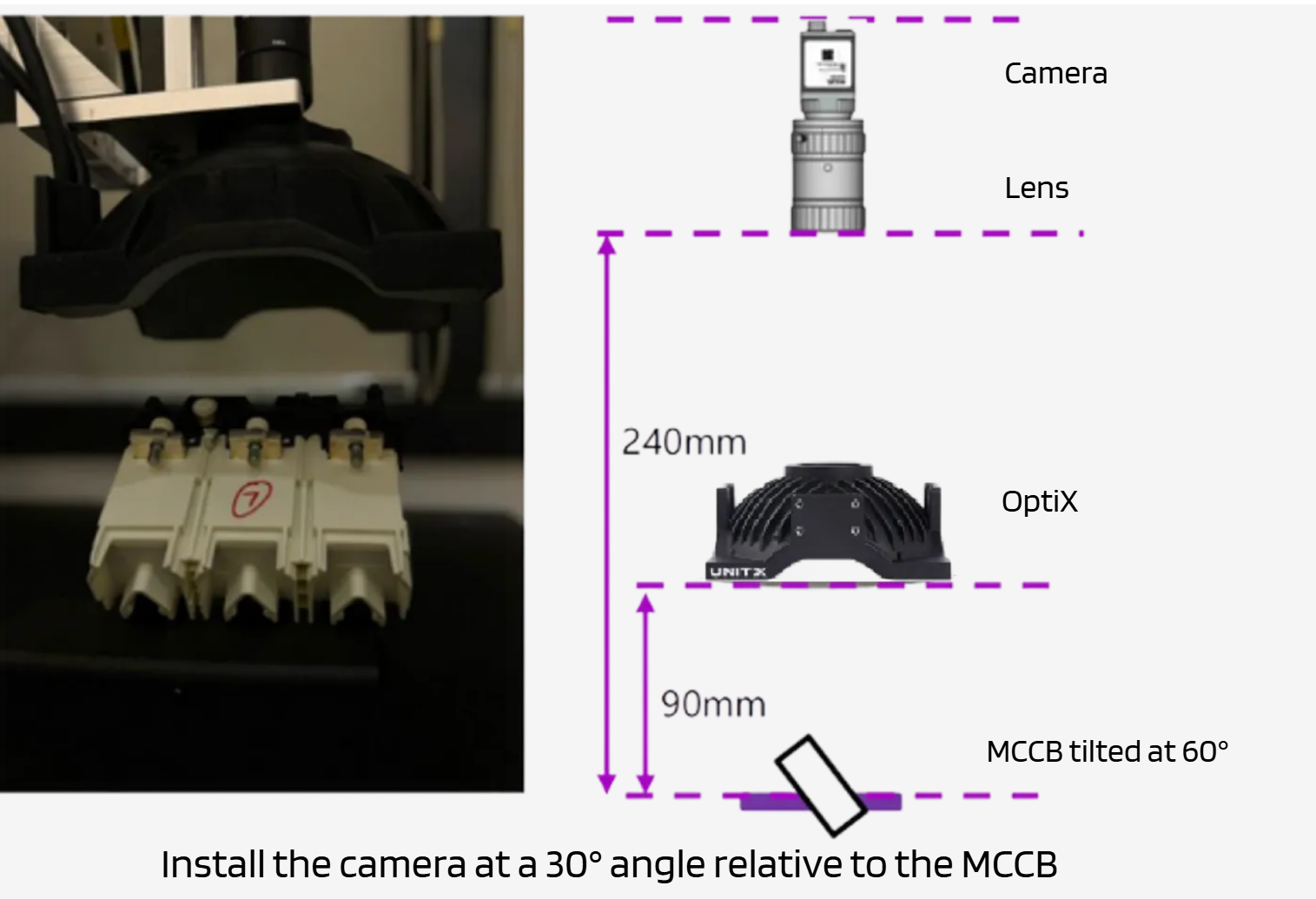
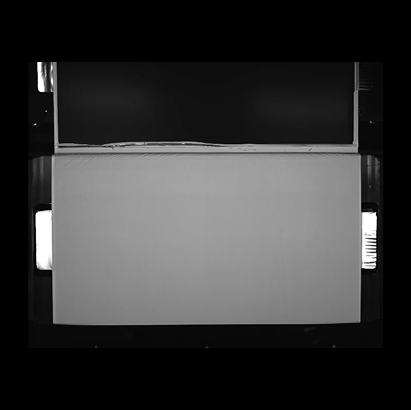
By tilting the camera at a 30° angle relative to the MCCB (capturing at 60° tilt), UnitX ensures the solder face is fully imaged.
System Configuration:
- Angled Precision: The camera is installed at a 30° angle relative to the MCCB to capture the target solder face, which is tilted at 60°. This specific geometry reveals the texture and volume of the solder that a standard top-down view would miss.
- High-Speed On-the-Fly Imaging: The system supports high-speed “Fly Capture” at 200 mm/s. The conveyor never needs to stop, allowing for a blistering exposure time of just 0.1s.
- Dual-Model Agility: The system is built to handle two different MCCB models simultaneously as they enter the inspection area.
- Data Traceability: All inspection results are automatically uploaded to the device layer, enabling full data sourcing and ensuring long-term product reliability.
Results: Consistency at Speed
The combination of smart optical angles and AI processing delivered reliable, traceable quality control.
1. Zero Risk
- False Acceptance Rate: 0%.
- The system achieved total containment of “No Solder” and “Burn” defects. No compromised breaker left the line.
2. High-Speed Processing
- Stop Capture Time: 0.1 s
- Inference Time: 0.5 s
- Fly Capture Speed: 200 mm/s.
- Whether the line is running in stop-and-go mode or continuous flow, the UnitX system keeps up.
3. Minimal Waste
- False Rejection Rate: ≤ 1%.
- The AI accurately distinguishes between acceptable solder variations and actual defects, keeping yield high and rework low.
Defect Visualization
The images below show the clear difference between a good joint and a defective one when viewed from the correct angle.
- “No Solder”: The metal contact is bare.
- “Insufficient Fill”: The solder doesn’t cover the pad.
- “Burn”: Visible discoloration from overheating.
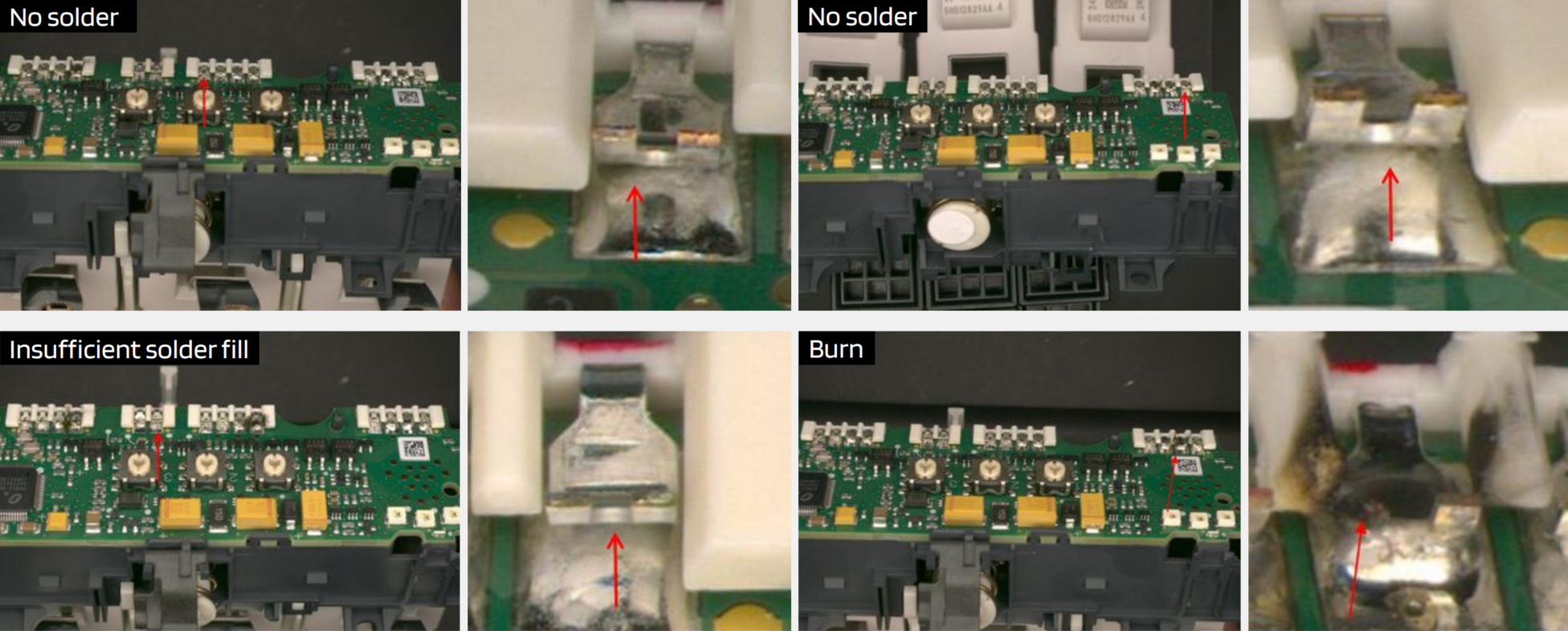
UnitX AI identifies critical connection failures like missing solder and heat damage.
Conclusion
In the electrical industry, reliability is the product. UnitX’s MCCB inspection solution ensures that the internal connections of your breakers are as tough as the casing they come in. By combining angled imaging with high-speed AI, we help manufacturers build the safest power distribution equipment on the market.
Don’t let a bad joint break your reputation.
Contact UnitX to automate your electrical component inspection.