Introduction: The Subjectivity of the “Class A” Surface
In the automotive industry, the “Class A” surface—the visible exterior—is the customer’s first impression. For a vehicle, the rooftop is a massive, prominent canvas. If the paint has runs, “orange peel,” or scratches, the brand’s reputation takes a direct hit.
However, inspecting paint quality is notoriously difficult because it is highly subjective.One inspector might pass a roof that another rejects. At line speeds, defects like “solvent pop” or fine dust are easily missed by manual inspection. This inconsistency leads to a massive hidden cost: Scrap and Rework.
Our client faced exactly this issue. Relying on manual inspection resulted in a staggeringly high scrap/rework rate of 18%. They needed a solution that was objective, consistent, and integrated with their existing robotic infrastructure.
The Challenge: Engineering Precision Across Black, White, and Silver FinishesThe project goal was to automate the detection of paint surface defects with a cycle time of 75 seconds.
Key Technical Hurdles:
- Color Complexity: The system had to inspect Black, Silver, and White finishes. These colors reflect light differently (black absorbs, white scatters), typically making it hard for a single vision setup to work for all.
- Defect Subtlety: The system needed to catch minute defects like Glue in Seams, Solvent Pop, Pitting, and Foreign Material.
- Integration: The system was required to integrate seamlessly into the manufacturer’s existing robotic inspection cells and production infrastructure.
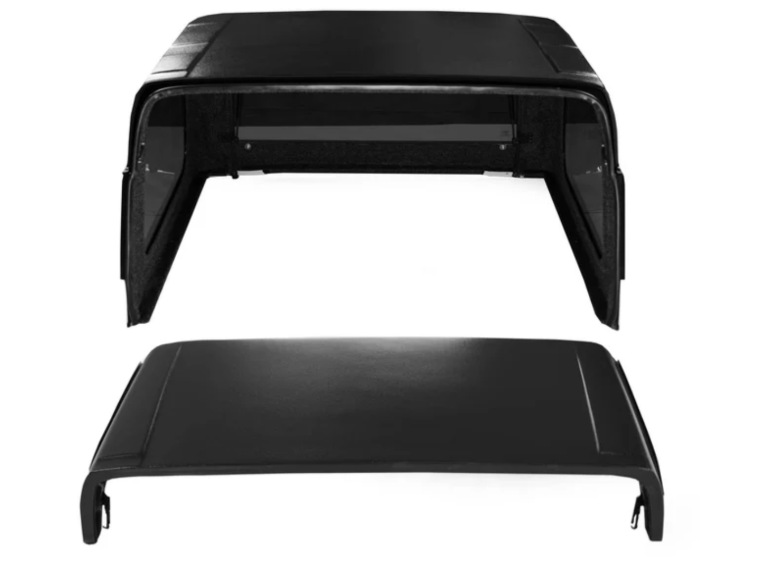
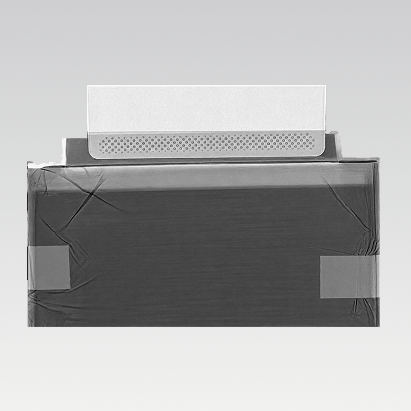
Large, glossy surfaces like this roof top are prone to defects that are difficult to spot consistently with the human eye.
The Solution: 20-Megapixel Precision & Adaptive AI
UnitX deployed a high-resolution vision system designed to act as the “Eye” and “Brain” for the existing inspection cell.
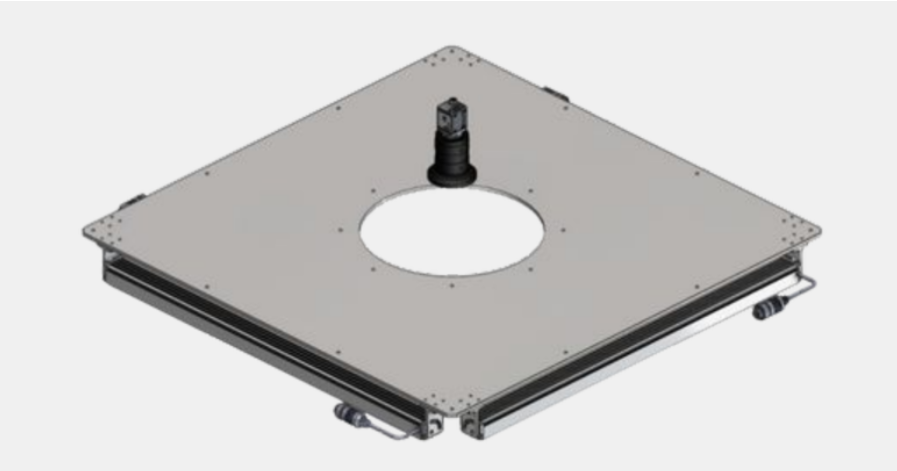
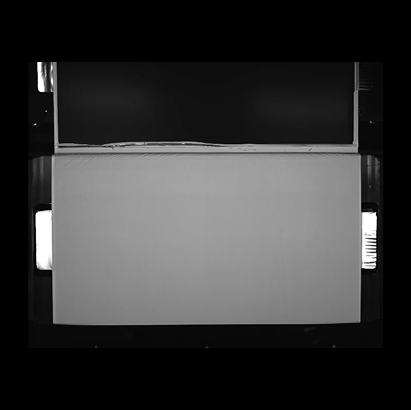
The UnitX system uses an OptiX Large FOV to cover the expansive surface area of the roof panel.
System Architecture:
- The Eye – High-Fidelity Imaging: We utilized four UnitX OptiX Large FOV units per cell, featuring 20 MP cameras paired with specialized rectangular bar lights. This extreme resolution allows the system to consistently detect microscopic dust and subtle defects across the massive expanse of the roof panel.
- The Brain – Adaptive AI Processing: Powered by CorteX, the system processes massive amounts of high-resolution image data in real-time. Crucially, the AI automatically adapts to the varying optical properties of black, silver, and white surface finishes, entirely eliminating the need for manual recalibration between product runs.
- Multi-Cell Deployment: The automated solution was integrated across three sequential quality gates (Panel Stations 1, 2, and 3), ensuring 100% inline verification before the panels leave the paint shop.
Results: Slashing Scrap from 18% to 1.6%
The transition from subjective manual inspection to objective AI analysis delivered an immediate, massive ROI by salvaging yield without compromising quality.
- Staggering Drop in Scrap Rate The product scrap rate dropped from 18% under manual inspection to just 1.6% with UnitX AI visual inspection. By accurately distinguishing between true defects and cosmetic anomalies, the manufacturer saved substantial material and rework costs.
- Zero Defect Escapes Despite the drastic improvement in yield, quality standards remained impenetrable. Across all three Panel Stations, the system maintained a flawless 0% False Acceptance Rate (FAR), ensuring zero defective roofs reached the customer.
- High-Speed Precision Tuning The AI models demonstrated exceptional precision at line speeds, completing inspections with a cycle time of just 30 seconds. Notably, Station 2 achieved a “perfect gate” with both a 0% FAR and a 0% False Rejection Rate (FRR). Stations 1 and 3 held highly optimized FRRs of ≤ 2.54% and ≤ 3.1%, respectively.
Defect Visualization
The AI’s ability to trace long, thin defects on a dark surface is crucial.
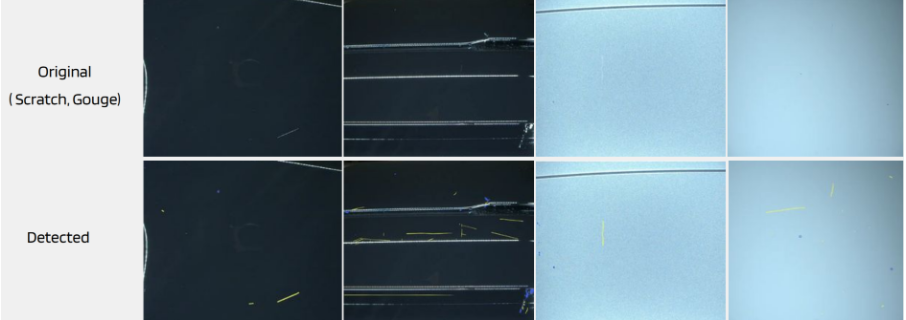
UnitX AI precisely traces scratches and gouges on the paint surface, eliminating the subjectivity of manual checks.
Conclusion
When a manufacturer moves from 18% scrap to 1.6% scrap, the technology pays for itself almost immediately. This case study proves that for automotive paint inspection, AI is not just a quality tool—it is a profitability tool. UnitX delivered consistency across different colors and stations, solving the “subjectivity problem” once and for all.
Is your scrap rate too high?
Contact UnitX to see how AI can save your production line.