Rule-based inspection and deep learning inspection are both useful when they fit the defect. The mistake is treating the decision as a public benchmark contest instead of a use-case fit analysis grounded in the plant’s own baseline.
Key takeaways
- Rule-based inspection fits stable, measurable features. Deep learning fits variable defect appearances.
- The best method is the one that produces a stable release decision for the defect family.
- Hybrid inspection is often stronger than forcing every decision into one method.
- Validation must include false acceptance (FA), false rejection (FR), cycle time (CT), and model or rule maintenance burden.
Do Not Make This a Technology Contest
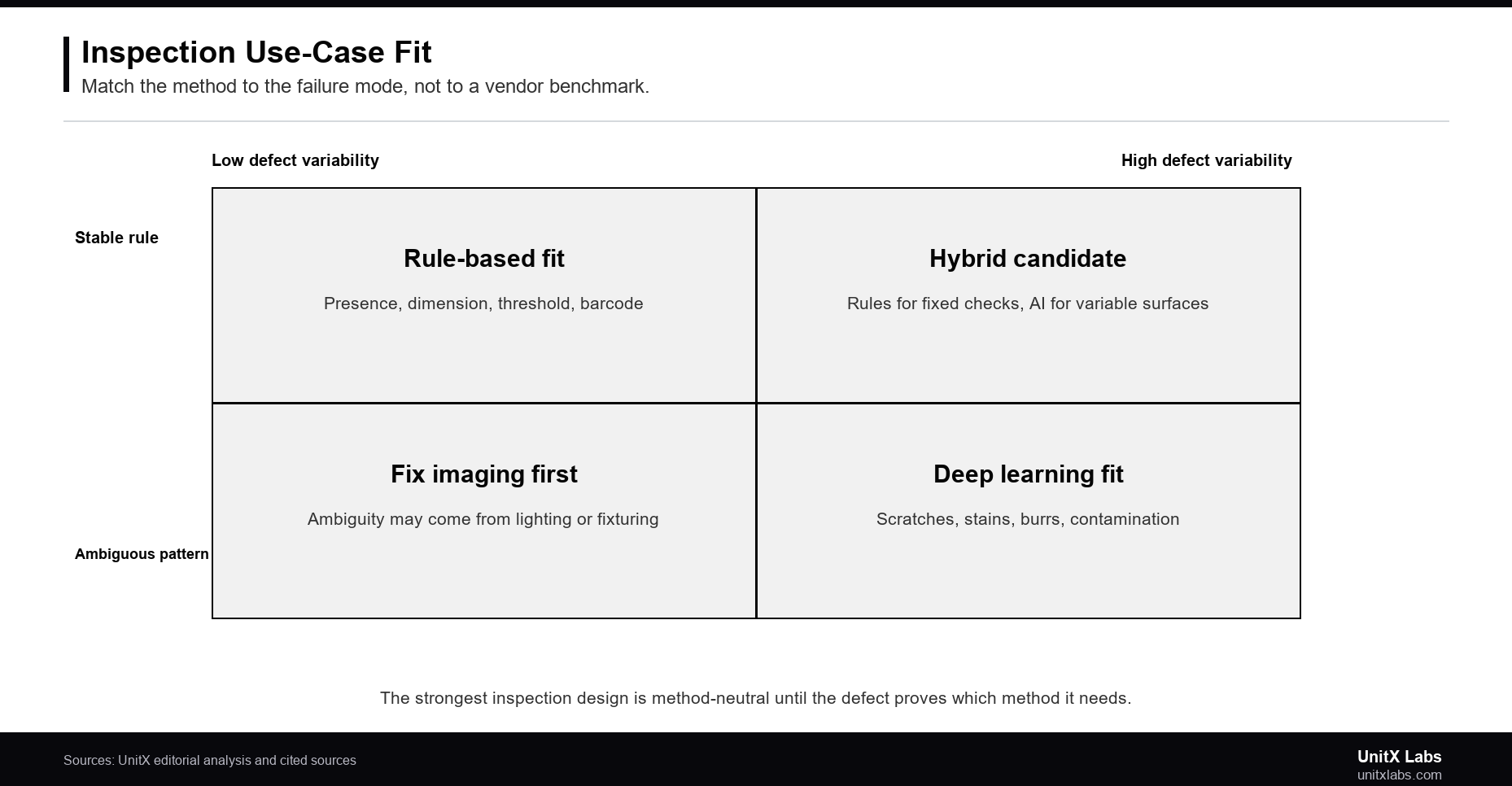
Rule-based inspection and deep learning inspection solve different classes of quality decisions. A rule-based system works well when the defect or feature can be expressed as a stable threshold: edge position, hole presence, barcode readability, dimensional tolerance, or a consistent contrast rule. Deep learning becomes useful when the defect varies in shape, texture, position, lighting response, or severity.
The right question is not whether rule-based or deep learning inspection is better. The right question is which method produces a stable release decision for the defect family in front of you.
This use-case perspective also reduces legal and sourcing risk. The article does not need competitor benchmarks or vendor rankings. Instead, it can evaluate the plant’s own failure modes, baseline data, and validation requirements. That aligns with the NIST AI Risk Management Framework (AI RMF), which emphasizes that AI systems should be mapped and measured in context before they are managed.
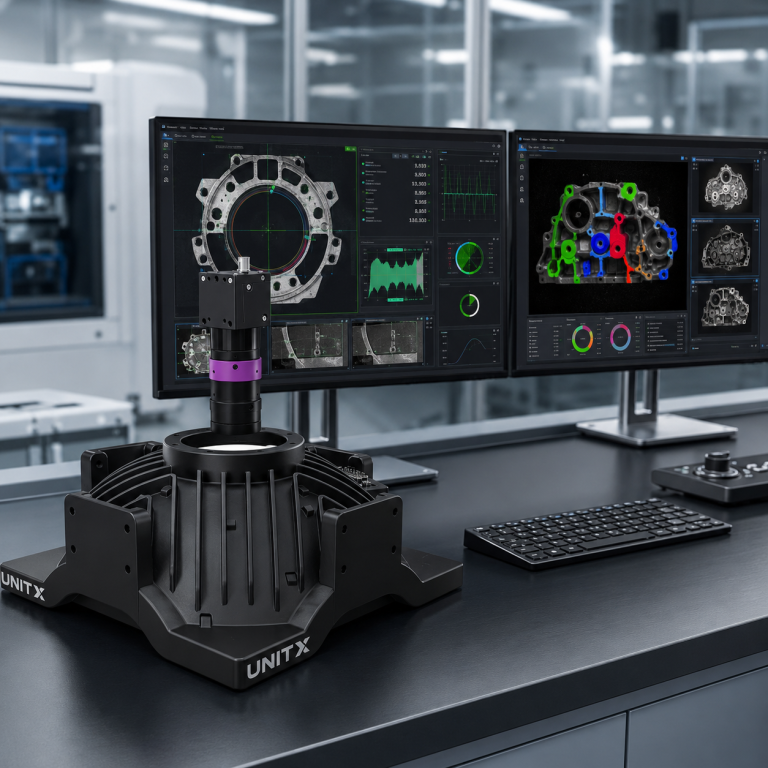
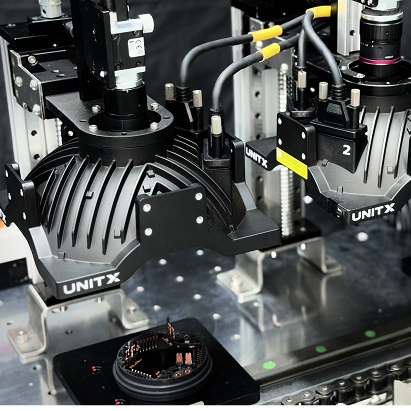
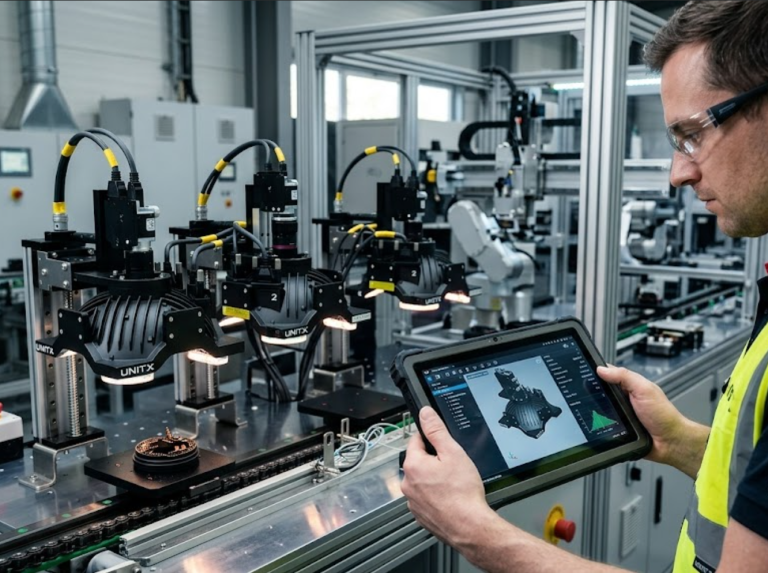
For UnitX, the direct fit is variable defect inspection. The UnitX AI visual inspection platform combines OptiX image capture with CorteX deep learning segmentation and high-speed inference. It is most relevant when deterministic recipes struggle with real production variation.
| Inspection Condition | Rule-Based fit | Deep Learning Fit |
|---|---|---|
| Feature is fixed and measurable | Strong fit | Usually unnecessary unless context is complex |
| Defect shape changes by lot or process | Weak fit | Strong fit when sufficient examples and validation exist |
| Lighting response is inconsistent | Requires optical redesign | Can help only after imaging stabilizes the signal |
| Quality requires an explainable threshold | Strong fit | Requires examples, masks, confidence review, and release rules |
| Frequent changeover | May require recipe programming | Can fit if the data capture and model update process are controlled |
Use Defect Variability as the First Decision Gate
Rule-based inspection is powerful when the object is stable. If a connector pin must be present, a gasket hole must be open, or a machined edge must stay within a tolerance range, deterministic logic can be simple, auditable, and fast. A deep learning model may add complexity without improving the release decision.
Variability changes the equation. Scratches can appear at different angles. Burrs can follow irregular edges. Stains can share color with normal texture. Weld defects can vary by shape, contrast, and location. In those cases, rule-based inspection often becomes a patchwork of exceptions. Each exception may fix one image set while creating a new false rejection on another.
UnitX CorteX is designed for this variable-defect space. It supports deep learning segmentation, pixel-level classification, and multi-task detection. The practical value is not that AI replaces every rule. It is that the plant can move variable defect recognition from fragile thresholds to data-backed segmentation.
Validation is Different for Each Method
Rule-based validation checks whether the threshold, region of interest, and lighting conditions remain stable across lots, shifts, and fixtures. Deep learning validation checks whether the model generalizes across representative OK parts, true NG parts, borderline samples, and production variation. Both methods fail when the validation set is too narrow.
The quality team should borrow the cost-of-quality lens from ASQ. A method that lowers appraisal cost but increases external failure cost is not a better system. A method that catches more defects but creates unacceptable overkill may also fail financially. The validation scorecard should include False Acceptance Rate (FA), False Rejection Rate (FR), Cycle Time (CT), review burden, and update effort.
For mixed use cases, a hybrid architecture is often the strongest answer. Deterministic rules can handle presence, measurement, and barcode checks, while deep learning handles surface defects, contamination, or shape variation. The plant should not force every inspection decision into one method.
A Practical Use-Case Fit Test
Start with 50 to 100 recent examples from the defect family. Ask an engineer to write a simple visual rule. If the rule is short, stable, and works across lots, rule-based inspection may fit. If the rule becomes a long list of exceptions, deep learning should be evaluated.
Then ask the opposite question: can the plant provide enough examples and release rules to validate a deep learning model? If not, collect more production evidence before committing to AI.
Use UnitX When Variability is the Bottleneck
A buyer should consider UnitX when the inspection problem has three signs: the defect varies, the line cannot slow down for manual review, and the quality team needs production traceability. In that case, OptiX can improve image evidence, and CorteX can train and run the AI inspection model at production speed.
If your current recipe grows more fragile with every product change, send recent OK and NG images, CT, FA and FR definitions, and reject rules to UnitX for a use-case fit review. The useful deliverable is not a generic AI claim. It is a recommendation on whether the defect should stay rule-based, move to deep learning, or use a hybrid gate.
The strongest inspection design is method-neutral until the defect proves which method it needs.
How to Decide When a Hybrid Approach is Justified
A hybrid inspection design is justified when the same station needs both deterministic and variable decisions. For example, a connector inspection task may need deterministic pin-count checks and deep learning segmentation for bent, scratched, or contaminated regions. Forcing the entire task into one method can make the system harder to validate.
The rule-based layer should handle decisions that quality teams can define as stable geometry or fixed thresholds. The deep learning layer should handle visual ambiguity that resists stable rules. The handoff between the layers must be explicit. If a deterministic gate fails, does the part reject immediately, or does the AI result still matter? If the AI flags a borderline defect, does the Programmable Logic Controller (PLC) reject, divert, or send the part to review?
Hybrid systems also need maintenance boundaries. A rule change may require recipe approval. A model update may require dataset review, validation images, and version control. When these two update paths are mixed without ownership, the plant can lose traceability. The method-fit decision should therefore include who owns each layer after Site Acceptance Testing (SAT).
UnitX projects should evaluate hybrid design when rule-based logic still has value but variable defects are the real bottleneck. The result is not a compromise. It is a cleaner inspection architecture: deterministic checks for deterministic problems, deep learning for variable visual evidence, and one release rule that quality can audit.
| Layer | Best Suited For | Validation Artifact |
|---|---|---|
| Rule-based | Presence checks, dimensions, fixed thresholds, barcode reading | Recipe, threshold record, and golden sample set |
| Deep learning | Scratches, stains, burrs, contamination, and irregular geometry | Labeled examples, holdout set, and FA/FR report |
| PLC decision | Reject, divert, hold, or pass actions | Timing test and part traceability log |
| Quality review | Borderline or new defect classes | Escalation rule and update approval record |
What to Document in the Method-Fit Decision
The final method-fit decision should explain why each inspection decision is rule-based, deep learning-based, or hybrid. Save the defect examples, threshold logic, labeled examples, holdout set, and release rules. This matters because a future process change can make a previously stable rule fragile or create a new defect class that requires model support.
The handoff should also define escalation procedures. If a rule-based gate and a deep learning result disagree, the system needs a clear action: reject, divert, hold, or send to review. Without that rule, a hybrid system can become two competing opinions instead of one auditable quality decision.
This documentation also supports future troubleshooting. When FR rises or a new escape appears, engineers can determine whether the issue belongs to imaging, rules, model data, or the final PLC decision.
Evidence Standards Used in This Guide
This guide avoids vendor-ranking evidence and competitor data tables. The outside references below are used only when they support a specific decision rule, validation boundary, integration requirement, or cost model.
| Source | How It Is Used |
|---|---|
| NIST AI Risk Management Framework (AI RMF) | Supports context-specific AI risk and validation decisions. |
| ASQ cost of quality | Keeps method choice tied to failure cost, overkill, and release risk. |
| NIST manufacturing quality assurance | Supports traceable measurement and production monitoring. |
| EMVA 1288 | Supports the point that image evidence must be measurable before method choice. |
| ISA-95 | Supports the need to connect inspection decisions to operations systems. |
Related UnitX Guides
- Explore the UnitX AI visual inspection platform
- Review OptiX software-defined imaging
- Review CorteX AI inspection capabilities
- Read more UnitX resources
Useful Next Step
If your rule set keeps growing with exceptions, share the defect taxonomy, recent OK and NG images, and FA/FR definitions with UnitX for a method-fit review.
Frequently Asked Questions
Is deep learning always better than rule-based inspection?
No. Rule-based inspection can be the better choice for stable, measurable, and deterministic features. Deep learning is better suited for variable defect appearance and complex visual patterns.
Can a production line use both methods?
Yes. Many inspection architectures use deterministic checks for fixed features and deep learning segmentation for variable defects.
How do I know when rules are failing?
Rules are likely failing when each new lot, fixture, or surface condition requires additional exceptions that increase false rejection or defect escapes.
Does this article compare vendors?
No. It compares method fit against the plant’s own baseline and defect behavior, without competitor data or competitor links.