Introduction: The Backbone of the Smartphone
The Mid-Frame is the chassis of a smartphone. It holds the screen, the battery, and the motherboard. While much of it is covered up in the final product, its dimensional and surface quality is critical for assembly. A dent on the frame can crack the screen during installation. Debris in the Type-C port can cause charging failures.
Inspecting the mid-frame is a multi-dimensional challenge. It’s not flat; it has curved side faces, intricate machined holes, and a rear face that acts as a heat sink. Manual inspection struggles to check all these angles efficiently, leading to downstream waste and rework when the phone fails at the final assembly stage.
The Challenge: Curves and Ports
The project goal was to automate the inspection of every critical surface of the mobile phone mid-frame.
The Scope of Inspection:
The system needed to cover a massive surface area:
- Main Surfaces: Front and rear mid-frame faces.
- Side Profiles: Both curved side faces (often polished or textured metal).
- Critical Interfaces: The TP (Touch Panel) interface area and the Type-C port region.
The Defect Matrix:
- Cosmetic Flaws: Discoloration, surface scuffs, scratches, and localized paint peeling.
- Functional Blockers: Impact dents, pressure marks, raised metal particles, burrs, and foreign debris trapped deep inside the Type-C port.
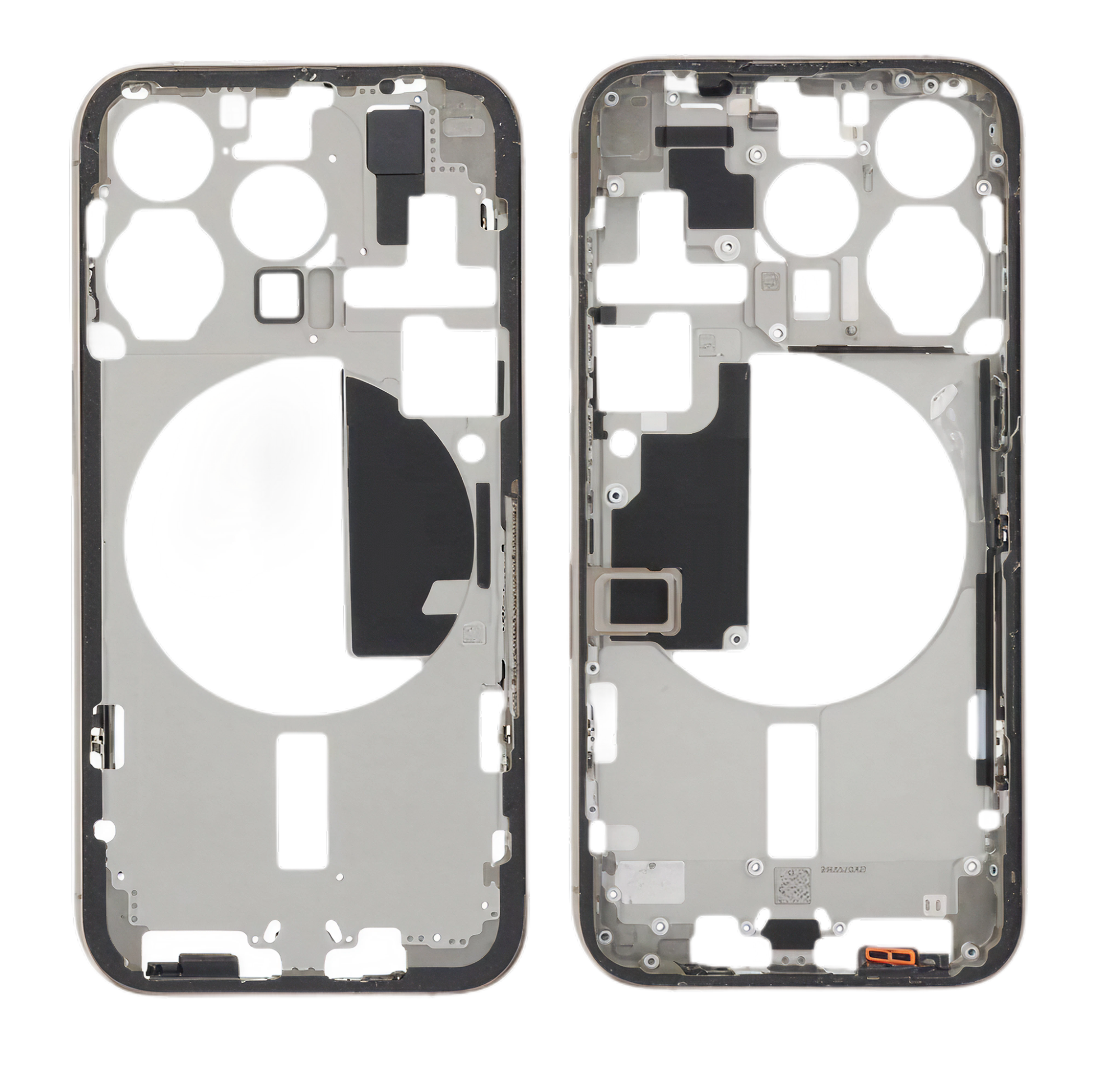
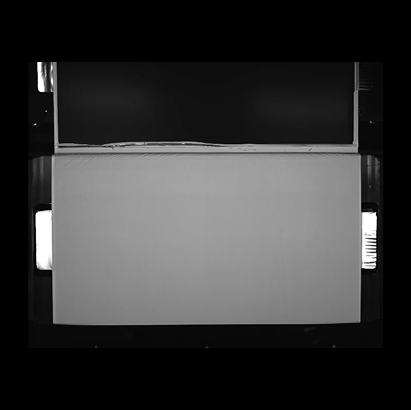
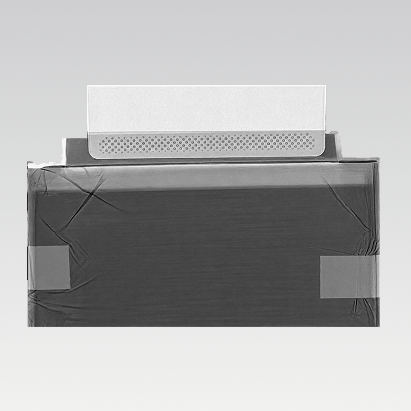
The mid-frame requires inspection of curved edges and the Type-C port to ensure smooth assembly.
The Solution: 5-Axis Robotics & Multi-Angle AI Vision
To achieve total surface coverage without slowing down production, UnitX deployed a robust, fully automated inline AI inspection cell capable of dynamically manipulating the part.
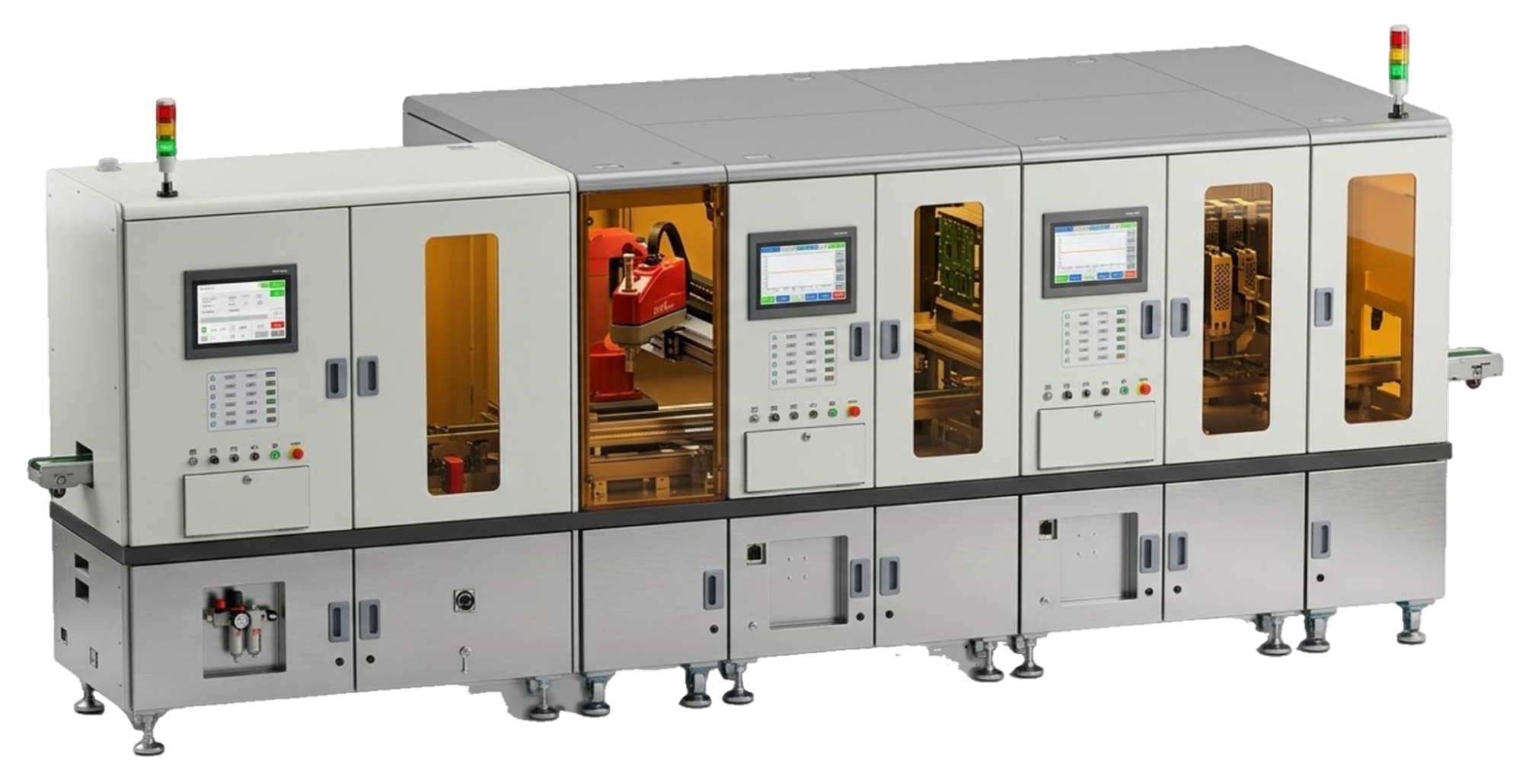
UnitX’s inline machine uses robotic flipping to present every side of the mid-frame to the cameras.
System Features:
-
- 7-System OptiX Array: The machine utilizes seven distinct UnitX OptiX visual inspection systems. This high-density optical network guarantees that every complex curve and deep machined port is captured in ultra-high resolution.
- 5-Axis Robotic Flipping: To inspect both the front and rear faces without manual intervention, the cell integrates a precision 5-axis robot to seamlessly rotate the mid-frame mid-process.
- Real-Time AI Processing (CorteX AI): The multi-angle visual data is instantly processed by the CorteX AI platform, which executes real-time defect classification and pass/fail decision-making.
- Automated Sorting & Traceability: Good (OK) and defective (NG) parts are physically sorted on the line, with comprehensive defect data pushed directly to the factory’s Manufacturing Execution System (MES) for full lifecycle traceability.
Results: A Solid Foundation
The automated line provided the rigorous quality gate needed for high-volume manufacturing.
1. Zero Defects Passed
- False Acceptance Rate: 0%.
- Critical issues like “Impact Damage” or “Trapped Adhesive” were caught 100% of the time. This prevents the costly scenario where a fully assembled phone has to be scrapped because of a bad frame.
2. High Efficiency
- False Rejection Rate: ≤ 3%.
- The AI successfully distinguishes between minor surface variations (acceptable in a hidden internal part) and actual defects, keeping yield high.
3. Fully Automated Flow
The system automatically feeds, flips, inspects, and sorts the frames, removing human handling from the equation entirely.
Defect Visualization
The images below show the system’s ability to inspect intricate details.
- “Type-C Port Area”: Checking for debris or damage.
- “Burr”: A tiny metal shaving that could short-circuit components.
- “Trapped Adhesive”: Glue residue that could interfere with screen bonding.
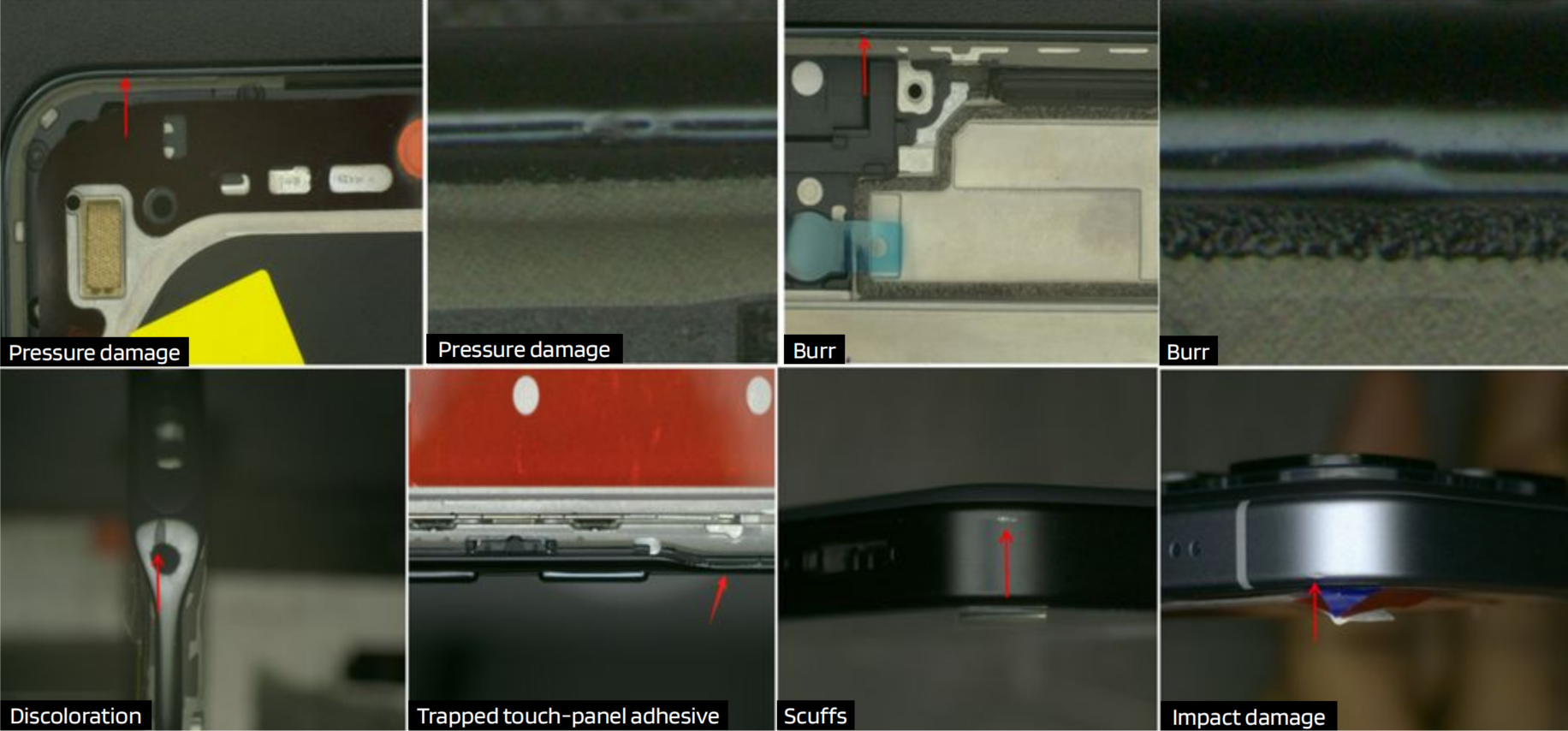
UnitX AI detects assembly-blocking defects like burrs and trapped adhesive.
Conclusion
A smartphone is only as strong as its frame. UnitX’s Mid-Frame Inspection solution ensures that this foundation is solid. By combining robotic manipulation with 7-camera AI vision, we catch the defects that cause assembly nightmares, protecting both the product and the profit margin.
Build on a better foundation.
Contact UnitX to automate your chassis inspection.