Introduction: The Hard and Soft of Electronics
Rigid-Flex PCBs are the backbone of modern compact electronics, allowing circuits to fold into tight spaces (like inside a smartphone or a camera). However, the junction where the rigid board meets the flexible ribbon is a stress point. Solder joints here are notoriously difficult to manufacture perfectly.
Common defects include “Lifted Joints” (where the connection peels away) and “Tombstoning” (where a component stands up vertically due to uneven wetting). These defects cause electrical failures that are incredibly costly to repair once the device is assembled.
Traditional vision inspection workflows struggle here. A standard top-down view often misses these complex structural anomalies, failing to reliably recognize issues like lifted joints or floating components. Furthermore, falling back on manual inspection is too slow, subjective, and inefficient to meet company quality standards.
The Challenge: Seeing the Side Profile
The manufacturer’s existing inspection workflow struggled with a critical flaw: poor recognition of elevated structural anomalies. The goal was to upgrade this equipment to finally master the complexities of rigid-flex soldering and systematically replace manual inspection.
Key Requirements:
- Capturing the Side Profile: The upgraded system had to eliminate top-down blind spots to catch elevated defects like floating components, high solder, lifted joints, and solder spikes.
- Total Quality Assurance: It had to simultaneously flag traditional surface-level errors, including joint misalignment, missing or excess solder, and solder bridging.
- Operational Agility: The solution couldn’t just be accurate; it had to be flexible. Hitting company KPIs meant enabling rapid model changeovers and accelerating production ramp-up times.
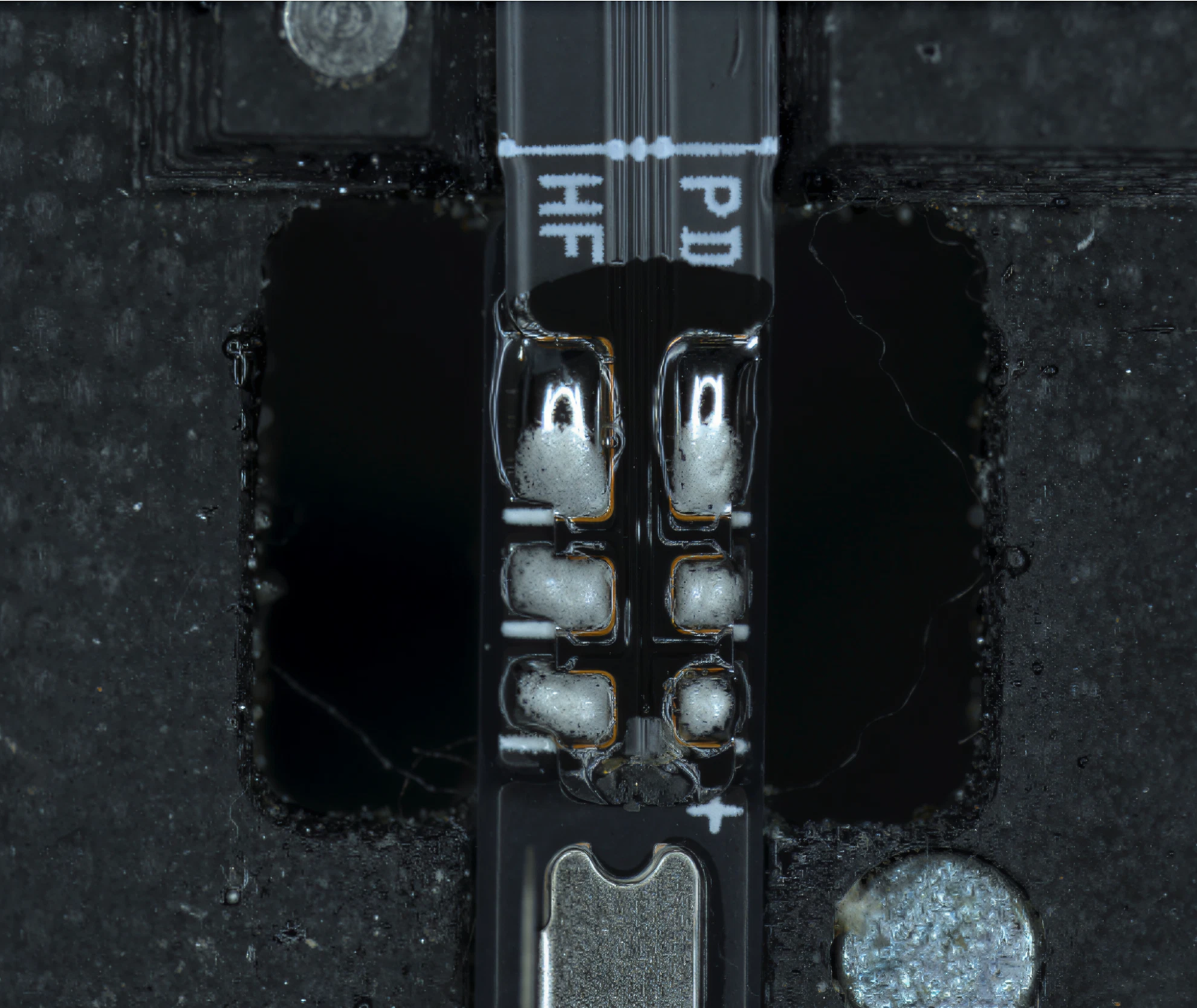
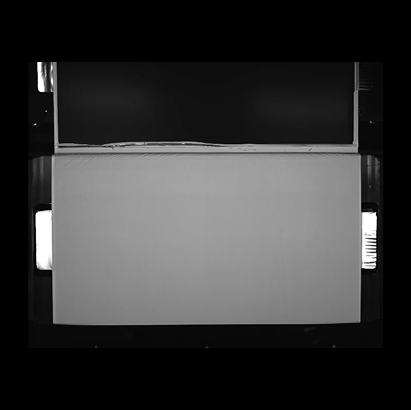
Rigid-flex solder joints require side-view inspection to detect lifting and height issues.
The Solution: Multi-Angle Vision Without the 3D Price Tag
Capturing vertical profile anomalies normally requires complex 3D scanners or moving camera heads. UnitX solved this by upgrading the inspection cell with a highly efficient, multi-angle optical design.
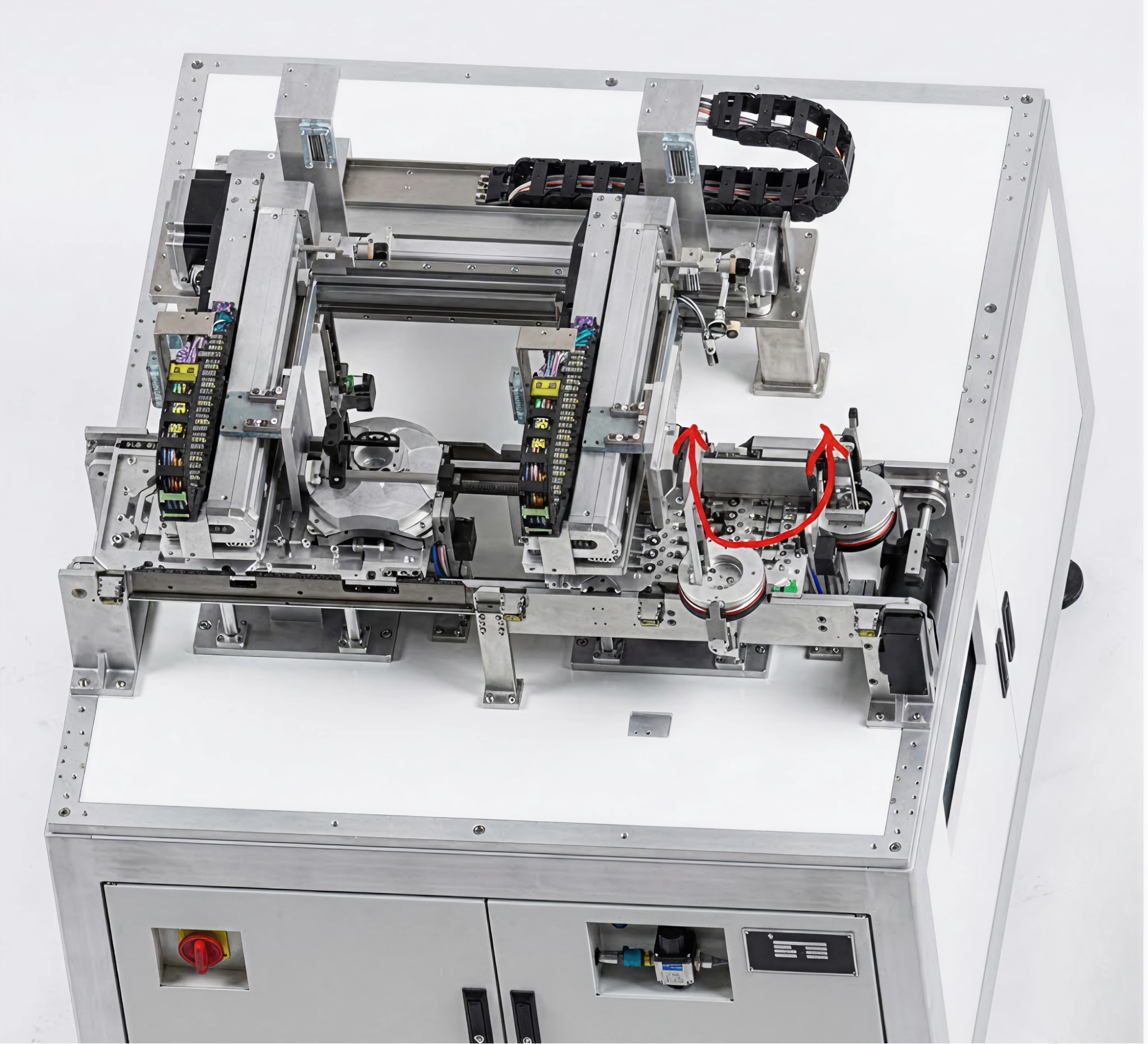
The UnitX system utilizes prisms to capture multiple viewing angles from a single camera position.
System Innovation:
- Prism Optics: By integrating 2x Prisms with the UnitX OptiX system, the camera can capture the side view of the solder joint simultaneously with the top view. This reveals the height and shape of the solder fillet.
- Modular Design: The system is designed as a modular upgrade to replace manual inspection, ensuring systematic quality checks.
- AI Classification: The CorteX AI analyzes these multi-angle images to distinguish between a healthy “fillet” and a “solder spike.”
Results: Precision at Scale
By upgrading to an automated, multi-angle inspection cell, the manufacturer systematically eliminated their optical blind spots and hit every strict performance KPI.
- False Acceptance Rate = 0% for critical defects: Completely eliminated escapes for vertical profile anomalies, securing the final assembly.
- False Acceptance Rate ≤ 0.05% for non-critical defects: Established a near-perfect baseline accuracy across all standard defect types.
- False Rejection Rate ≤ 0.5%: Keep false alarms to an absolute minimum, ensuring operators don’t waste time reviewing healthy joints.
- Cycle Time (CT) = 2S: Delivered deep learning inference and multi-angle analysis without slowing down the production line.
-
The Bottom Line: The automated upgrade successfully elevated imaging quality, reduced operational costs, and improved the final product’s reliability.
Defect Visualization
The images below demonstrate the value of the side view.
- “Excessive Solder Height”: Clearly visible from the side profile.
- “Tombstoning”: The component is standing up vertically—impossible to miss with this angle.
- “Solder Spike”: A sharp peak indicating process issues.
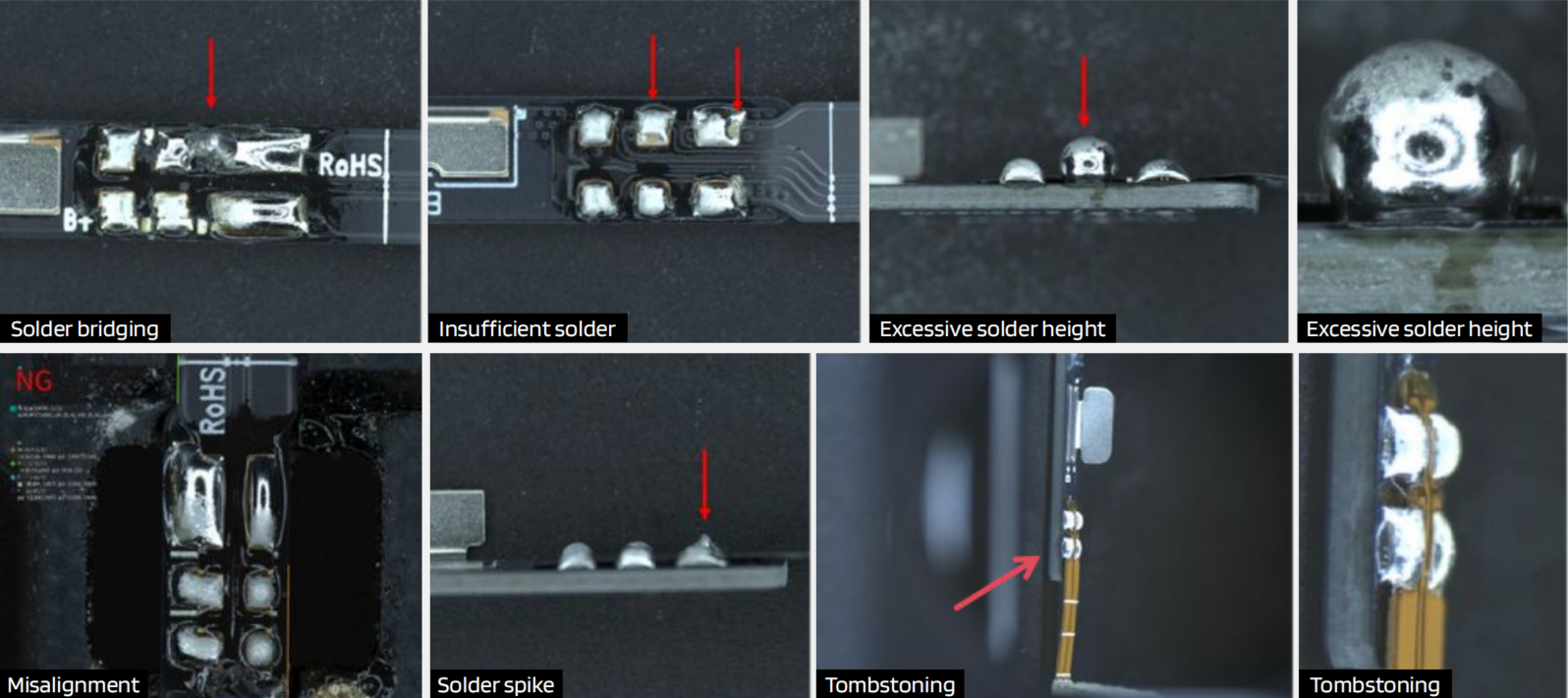
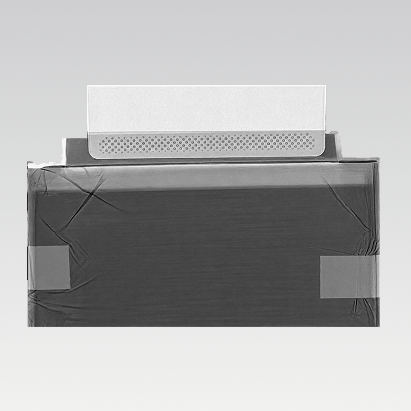
Side-view optics allow UnitX AI to identify tombstoning and solder spikes.
Conclusion
In Rigid-Flex manufacturing, looking straight down isn’t enough. You need to see the joint from all angles. UnitX’s prism-enhanced AI inspection solves the geometry challenge, ensuring that your flexible circuits are robust enough to handle the fold.
Are your solder joints lifting?
Contact UnitX to see what your current AOI is missing.