The single biggest bottleneck in deploying AI visual inspection on a production line is not the AI model, it’s the training data. Rare defects may appear only once every 10,000 cycles. When a quality engineer needs 500 to 5,000 labeled defect images per category to train a traditional deep learning model, months of data collection become unavoidable before a single line can go live.
Generative AI changes that equation. According to a 2025 industry analysis, 72% of manufacturers are now using AI vision systems for inspection, yet widespread adoption is still constrained by data scarcity and deployment complexity. This article compares the five most consequential generative AI approaches for manufacturing defect data synthesis — covering what each does well, where each falls short, and how to choose the right one for your factory context.
Key Takeaways
- Traditional machine learning requires 500–5,000 labeled defect images per category, while generative AI tools can reduce this requirement to as few as 3–5 real samples.
- Production-integrated tools like FleX-Gen are optimized for speed, enabling deployment with as few as 3 real samples in as little as 7 days , while research frameworks offer maximum flexibility for novel applications.
- Stable Diffusion fine-tuned with LoRA has demonstrated a 5.95–6.85% improvement in defect segmentation accuracy on industrial datasets.
- DT-GAN reduces error rates by up to 51% in few-shot defect detection scenarios across the MVTec AD benchmark.
- Zero-shot domain transfer using diffusion models can improve detection mAP from 65% to 85.1% on entirely new product surfaces without requiring any real defect samples.
- Choosing the right approach depends on three factors: how quickly you need to go live, whether your defect morphology is consistent, and your team’s ML infrastructure capabilities.
Why Synthetic Defect Data Has Become Non-Negotiable
The Sample Scarcity Problem in Production
In an ideal world, a factory would collect thousands of defect images per category before training an AI inspection model. In practice, a connector manufacturer running 1,200 parts per minute may see a specific micro-crack defect only twice a week. By the time a conventional deep learning system has enough real data to train on, the product may have already cycled through thousands of customer shipments.
This is the core problem that generative AI solves: it manufactures training data on demand, expanding rare real samples into a diverse, photorealistic dataset that teaches the model what the defect looks like under different lighting conditions, orientations, and surface variations.
The research literature supporting this approach is now substantial. A 2025 academic review published in Applied Intelligence (Springer) confirmed that few-shot defect detection frameworks using generative augmentation consistently outperform models trained on limited real-world data alone — particularly in industrial environments with small lot sizes and rapidly changing product variants.
The Two Flavors: Research Frameworks vs. Production Tools
Before comparing specific approaches, it’s important to understand a foundational distinction. Research-grade generative frameworks — such as DT-GAN, Ali-AUG, and diffusion-based DIAG pipelines — are designed for maximum flexibility and benchmark reproducibility. These systems often require GPU clusters, custom training pipelines, and experienced ML engineers to operate effectively.
Production-integrated tools, by contrast, are engineered for the factory floor. They connect directly to AI inspection systems, automate labeling workflows, and are designed to be operated by quality engineers rather than data scientists. Neither category is universally superior — the right choice depends on your deployment constraints, technical resources, and production goals.
The 5 Approaches: From Research to Production
1. FleX-Gen — Production-Integrated Synthetic Defect Generation
Best for: Manufacturers that need to go live quickly with minimal ML overhead.
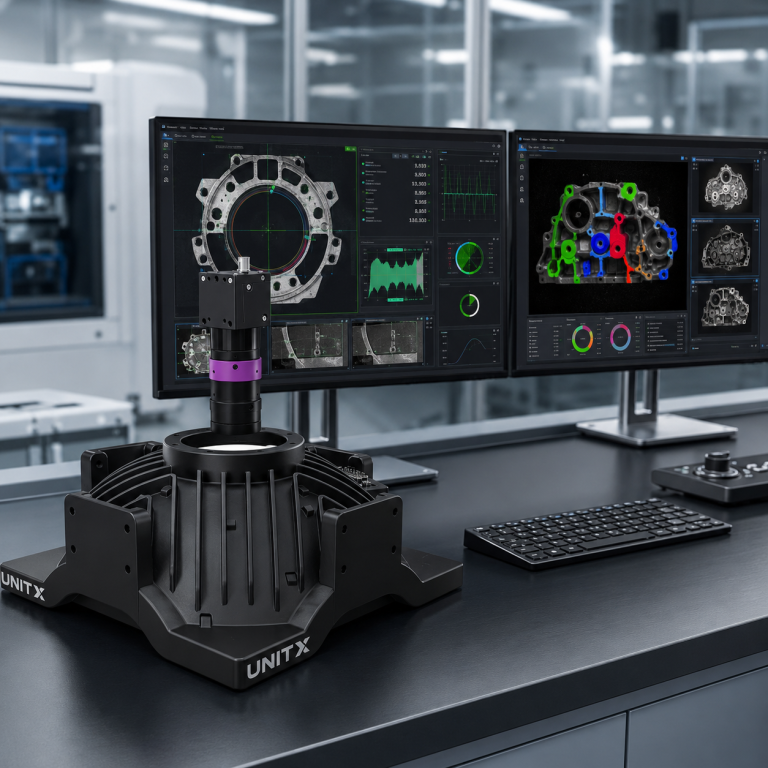
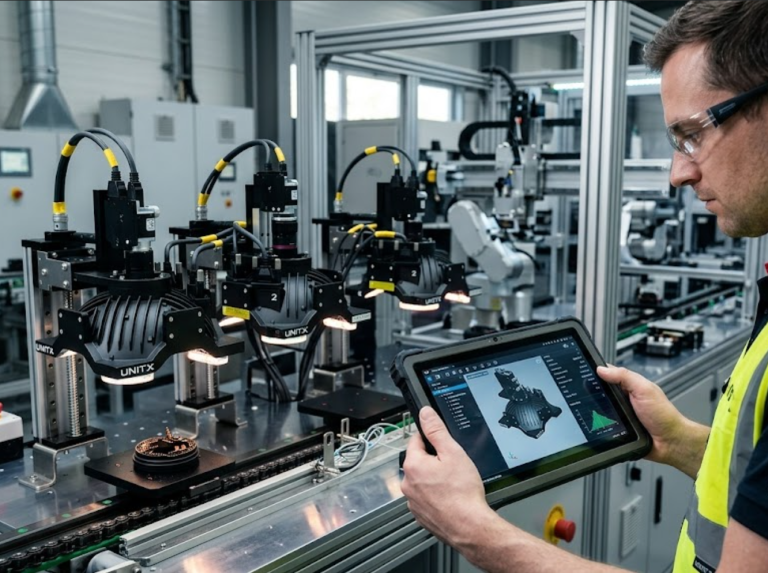
FleX-Gen is UnitX’s cloud-based generative AI tool built specifically for in-line AI visual inspection. It requires as few as 3 real defect images to generate a complete synthetic training dataset — photorealistic, label-ready, and automatically validated using similarity metrics before being added to the training pipeline.
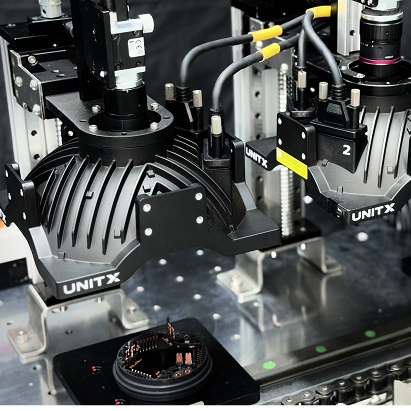
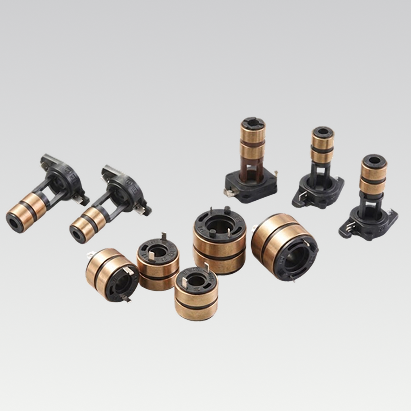
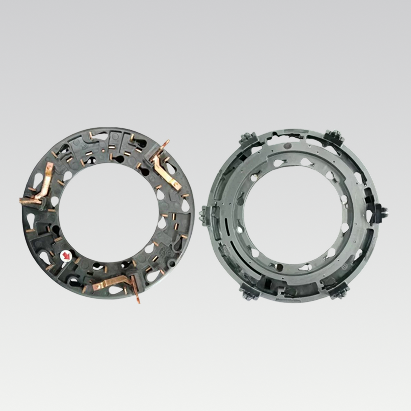
Unlike standalone research frameworks, FleX-Gen is designed to integrate directly with the CorteX AI inference system, enabling an end-to-end workflow from sample collection to production deployment in as little as 7 days (UnitX data on file). According to a UnitX press release, FleX-Gen accelerates model deployment by up to 3X and has been production-validated across automotive, EV battery, semiconductor, and connector inspection applications.
Its auto-validation pipeline is particularly valuable for rare defect categories. Rather than manually reviewing hundreds of synthetic images, the system selects only the highest-fidelity outputs based on structural similarity scoring.
Limitation: Because FleX-Gen is designed for a specific hardware-software ecosystem, it is not a standalone research tool. Engineers working with heterogeneous vision systems or requiring cross-platform data exports should evaluate integration requirements with a UnitX expert.
2. Stable Diffusion with LoRA Fine-Tuning
Best for: Teams with ML infrastructure that need high-realism augmentation for a specific surface type.
Latent diffusion models — particularly Stable Diffusion fine-tuned using the Low-Rank Adaptation (LoRA) technique — have emerged as one of the most promising research-grade approaches for industrial defect synthesis. The process involves fine-tuning a pretrained foundation model on a small set of real defect images for a specific material type, then using the fine-tuned model to generate diverse synthetic variants.
A 2024 study published in Sensors (NCBI) demonstrated that augmenting training data with stable diffusion–generated images improved mean Intersection over Union (mIoU) by 5.95–6.85% on DeepLabV3+ and FPN segmentation models trained on the NEU-seg steel surface dataset. The gains were consistent across synthetic-to-real ratios, suggesting that even modest synthetic augmentation can provide meaningful accuracy improvements.
The main constraint is computational: fine-tuning a LoRA adapter requires GPU resources and ML engineering time, making this approach more suitable for teams with established MLOps infrastructure than for factory-floor deployment by quality teams.
3. DT-GAN — Defect Transfer Across Products
Best for: High-mix manufacturers that need to transfer defect knowledge from one product to another.
Defect Transfer GAN (DT-GAN) addresses one of the most persistent challenges in manufacturing AI: defect appearance changes dramatically across product variants, materials, and surface finishes. A scratch on a polished aluminum housing looks nothing like a scratch on a textured polymer panel — even though both are “scratches.”
DT-GAN learns a disentangled representation of defect type (independent of background) and product surface (independent of defect), then recombines them to synthesize realistic defect images on any target surface. On the widely used MVTec Anomaly Detection benchmark, DT-GAN reduced defect classification error rates by up to 51% compared to conventional augmentation methods, with consistent gains even in few-shot regimes. For high-mix production environments with frequent part changeovers, this cross-product transfer capability makes DT-GAN particularly compelling — though it still requires ML engineering expertise for training and integration.
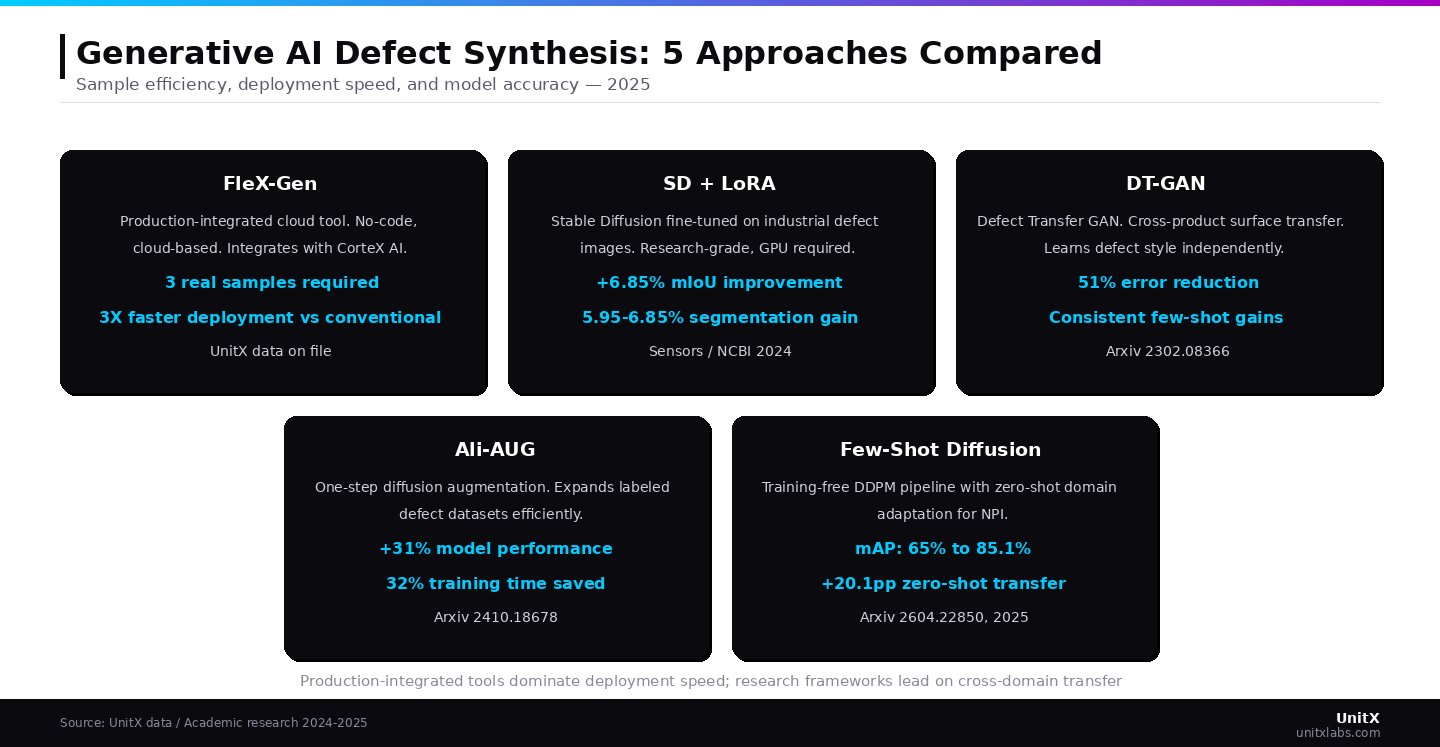
Production-integrated tools dominate deployment speed, while research frameworks lead in cross-domain transfer capabilities.
4. Ali-AUG — One-Step Diffusion for Faster Augmentation
Best for: Teams that need fast augmentation without sacrificing quality.
Ali-AUG introduces a single-step diffusion model for labeled defect data augmentation, specifically designed to reduce the time and computational cost of synthetic image generation while maintaining training effectiveness.
When evaluated against multiple augmentation baselines, Ali-AUG improved model performance by 31% compared to other augmentation methods and by 45% versus models trained without augmentation. It also reduced training time by 32%, which is especially valuable for manufacturers iterating on models across multiple product lines simultaneously.
Ali-AUG supports both paired and unpaired datasets, giving quality teams flexibility in how they structure their real defect libraries. The tradeoff is that, as a research framework, it requires integration work to connect with commercial inspection systems — it is a data preparation tool, not a complete inspection platform.
5. Few-Shot Diffusion with Zero-Shot Domain Transfer
Best for: New product introduction (NPI) scenarios where zero real defect data is available.
The most advanced approach on this list is zero-shot domain adaptation using diffusion-based defect synthesis. Research published in 2025 demonstrated a framework combining masked textual inversion, noise-blended conditioned generation, and gradient-aware post-processing to synthesize defect images on entirely new product surfaces — without requiring any real defect samples from those surfaces.
In zero-shot settings, detection mAP improved from 65.0% to 85.1% on novel target surfaces. In few-shot augmentation settings, mAP increased from 78.8% to 83.3%.
For manufacturers rapidly introducing new products — particularly automotive tier suppliers and consumer electronics factories — this capability addresses the “cold start” problem. The inspection model can become operational from day one of a new product run, rather than waiting weeks for sufficient defect data to accumulate.
The 2025 Visual AI Manufacturing Landscape report from Voxel51 identifies new product introduction as one of the primary unsolved challenges in factory AI deployment, making this research direction highly relevant for production environments.
Head-to-Head: How to Choose the Right Approach
| Approach | Min. Real Samples | Deployment Speed | ML Expertise Required | Best For |
| FleX-Gen | 3 images | 7 days | Low (no-code) | Production deployment |
| SD + LoRA | 20–50 images | Weeks | High (GPU + ML eng) | Surface texture defects |
| DT-GAN | 10–30 images | Weeks | High | High-mix cross-product |
| Ali-AUG | 5–15 images | Days (once set up) | Medium | Augmentation speed |
| Few-Shot Diffusion | 0 (zero-shot) | Research stage | Very High | New product introduction |
The decision tree is relatively straightforward: if you need a production line running within weeks and your team does not have dedicated ML engineering capacity, a production-integrated approach is the only practical path. If your team has GPU infrastructure and can support a longer integration cycle, research frameworks offer more flexibility for novel surface types and cross-product scenarios.
The UnitX case study library includes documented examples of FleX-Gen deployments across automotive and battery manufacturing, providing a useful benchmark for comparing against your own project timeline requirements.
What Factory Engineers Get Wrong About Synthetic Defect Data
The most common misconception is that more synthetic data is always better. In practice, synthetic images that appear visually plausible but are morphologically inconsistent with real defects can actively harm model accuracy by teaching the classifier to recognize artifacts of the generative process rather than the actual defect itself.
Auto-validation pipelines (such as those used in FleX-Gen) address this issue by filtering synthetic outputs using structural similarity metrics. When using open-source frameworks without built-in validation, quality engineers should include a human-review step, particularly for the first batch of generated images. According to coverage from the Association for Advancing Automation, auto-validation pipelines that use similarity metrics to screen synthetic outputs are considered a best practice for industrial deployments.
The second misconception is that synthetic data can fully replace real data. Evidence consistently shows that mixed real-and-synthetic datasets outperform either approach alone: real data provides authentic distribution patterns, while synthetic data fills the long tail of rare defect variants that real production environments may never generate in sufficient volume.
Frequently Asked Questions
How many real defect images do I actually need to start synthetic generation?
It depends on the tool. Production-integrated systems like FleX-Gen require as few as 3 real images per defect category. Research frameworks such as Stable Diffusion with LoRA typically require 20–50 images for effective fine-tune, although zero-shot diffusion approaches can operate without any real defect data by transferring defect morphology from previously seen surface types.
For most production deployment scenarios, 5 real images per category is a practical working minimum.
Will synthetic defect data reduce my false rejection rate?
Yes, when implemented correctly. One of the most common causes of high false rejection rates in AI inspection systems is an imbalanced training dataset. The model sees far more “good” images than “bad” ones, so it learns an overly conservative detection threshold that flags borderline-acceptable parts. Synthetic defect generation directly addresses this imbalance.
UnitX customers using FleX-Gen have reported meaningful reductions in false rejection rates, contributing to the overall reduction of up to 30% in inspection-related costs observed during first-quarter deployments (UnitX customer data, 2026).
Is generative AI for defect synthesis mature enough for regulated industries?
For automotive and EV battery manufacturing, yes — production-validated deployments already exist at scale. For medical device inspection, the situation is more nuanced. While the technology performs well, the validation documentation requirements for FDA-regulated environments add additional qualification time.
A qualified AI inspection platform that provides deployment audit trails and labeled dataset provenance — as discussed in the UnitX blog — is essential for these applications.