Introduction: The Backbone of the Fuel Cell
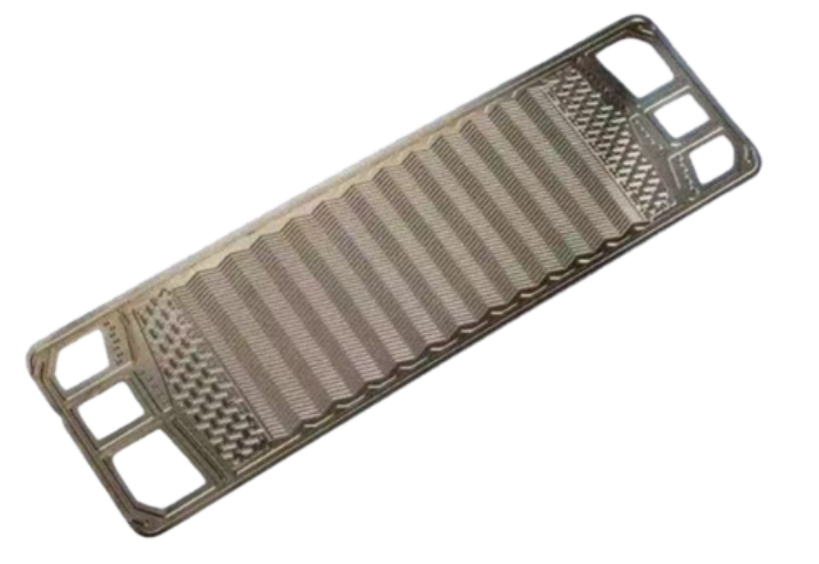
In the race toward zero-emission transportation, Hydrogen Fuel Cell Vehicles (FCEVs) are gaining momentum, particularly in heavy-duty transport. At the core of every fuel cell stack lies the Bipolar Plate.
These plates are the lungs of the system—distributing hydrogen and oxygen, conducting current, and managing heat. However, their role makes them incredibly sensitive to quality. A simple scratch or indentation on the sealing surface can cause a gas leak. A “burr” or “warping” can prevent the stack from compressing correctly, compromising power density and safety.
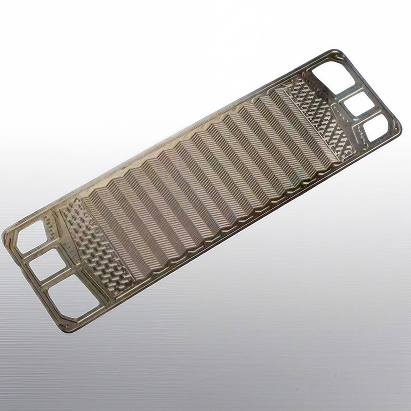
Inspecting these plates is difficult. They are large, feature intricate flow channels (ridges and valleys), and are produced in high volumes. Manual inspection is simply too slow and subjective to guarantee the safety of a high-pressure hydrogen system.
The Challenge: Scratches, Liquid, and Warping
The project goal was to fully automate the quality control of these critical components. The system needed to replace manual processes to enhance accuracy and enable data-driven process optimization.
Specific Challenges:
- Defect Variety: The system had to detect physical damage (scratches, dents, burrs), process residues (black spots, liquid drops), and structural issues (warping).
- Surface Complexity: Distinguishing a “scratch” from the natural texture of the flow field channels requires sophisticated imaging.
- Size Flexibility: The manufacturer produces various plate sizes, requiring a machine that can handle a wide range of dimensions.
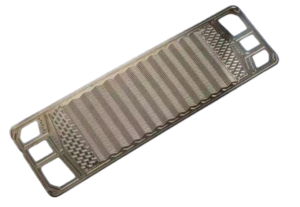
Bipolar plates feature complex flow channels where defects can hide, leading to potential gas leaks.
The Solution: Dual-Workstation Flexibility
UnitX designed a dual-workstation inspection line equipped with four cameras to examine the plates comprehensively.
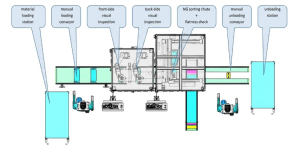
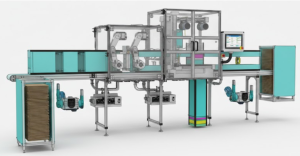
The UnitX line inspects the front and back of the plate, checks for flatness, and automatically sorts NG parts.
System Capabilities:
- Double-Sided Inspection: The system utilized two OptiX units mounted on a robotic arm to inspect both the front and back surfaces.
- Extreme Flexibility: It is compatible with a massive size range. It can handle plates as large as 600 x 250 mm and as small as 100 x 40 mm, making it future-proof for different stack designs.
- Process Integration: Results are integrated with the MES (Manufacturing Execution System), allowing the manufacturer to trace defects back to specific upstream process steps.
Results: Safety and Speed
The UnitX visual inspection system successfully automated the quality gate, ensuring that only perfect plates enter the fuel cell stack.
-
- Inspection Accuracy:False Acceptance Rate ≤ 0.05%. Acts as a strict firewall, ensuring near-zero defects leakage in the field.
- Yield Optimization : False Rejection Rate ≤ 3%. Advanced AI to identify the critical defects and non-critical variables like water droplets.
- Throughput Speed: 8 Seconds per piece. Rapid dual-side scanning and flatness checks for high-volume lines.
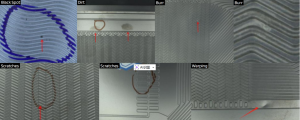
UnitX AI detects critical structural defects like warping and burrs, as well as surface contamination.
Conclusion
As the hydrogen economy scales, the manufacturing of bipolar plates must move from “lab scale” to “mass production.” UnitX’s inspection solution provides the speed, flexibility, and accuracy needed to make this transition. By catching defects early, we help manufacturers build safer, longer-lasting fuel cells.
Scaling up your fuel cell production?
Contact UnitX to automate your bipolar plate inspection.