Introduction: When the Weld Determines the Lifespan
In the assembly of automotive batteries, TIG (Tungsten Inert Gas) welding is the industry standard for joining critical components like the Positive Electrode. TIG welding offers precision and strength, but the quality of the seam determines the longevity and safety of the entire battery unit.
A poor weld means weak structural integrity or poor electrical conductivity. However, inspecting these welds is a major headache for manufacturers. Weld beads are naturally irregular; distinguishing between a harmless surface variation and a dangerous “pore” or “missed weld” is difficult for human eyes—especially at production speeds. Manual inspection suffers from high error rates, leading to either dangerous escapes or unnecessary scrap.
The Challenge: The Complexity of the Arc
The project goal was to move from unreliable manual checks to a fully automated system capable of certifying the weld quality.
The defect landscape for TIG welding is complex. The system needed to detect:
- Structural Failures: Missed welds, offset welds, porosity (tiny holes), and overflow.
- Process Errors: Copper spatter, misalignment, and twisting.
- Surface Quality: Discoloration and wrinkling.
The challenge was to catch these defects without triggering false alarms on the natural ripples of the weld bead.
The TIG weld seam on the positive electrode must be free of porosity and misalignment to ensure battery reliability.
The Solution: Side-View AI Visual Inspection
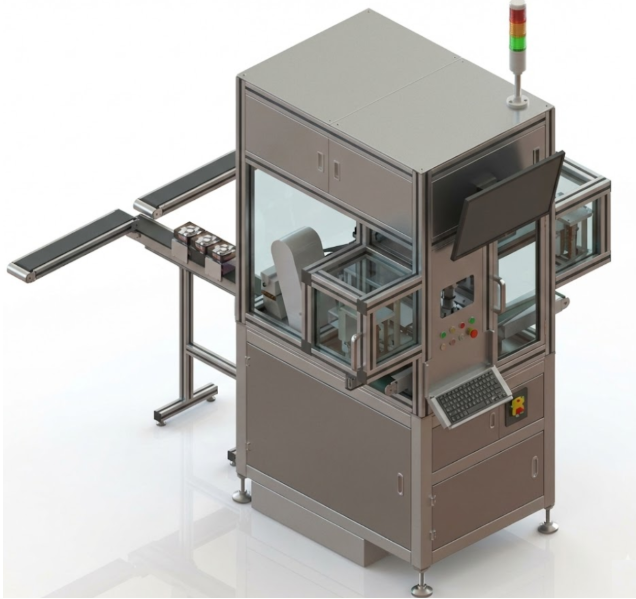
UnitX deployed a specialized inspection station designed to focus entirely on the weld seam.
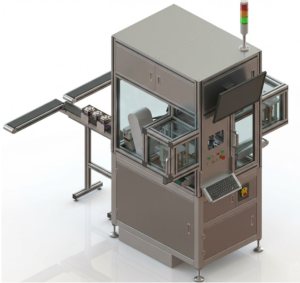
UnitX’s automated station uses a specialized side-camera setup to inspect the weld profile.
System Architecture:
- Side Camera Configuration: Unlike top-down views which might miss the profile of the bead, this solution inspects the argon arc weld surface using a side camera. This provides the optimal angle to see “offset welds” or “misalignment.”
- Single-Product Focus: The station is tuned for high-speed processing of single products, ensuring maximum throughput.
- MES Integration: Every weld result is seamlessly uploaded to the customer’s MES (Manufacturing Execution System), creating a digital birth certificate for each battery component.
Results: Precision in a “Noisy” Environment
Welding data is visually “noisy,” but UnitX AI cuts through the noise to deliver impressive numbers.
1. Safety Guardian
- False Acceptance Rate: 0%.
- Critical defects like “Missed Weld” or “Porosity” were caught 100% of the time. This eliminates the risk of a weak battery entering the vehicle assembly.
2. Minimizing Waste
- False Rejection Rate: ≤ 1%.
- This is a standout metric. In automated welding inspection, traditional rule-based software notoriously triggers high false reject rates because it can’t distinguish actual defects from acceptable heat discoloration. UnitX’s AI successfully isolated harmless cosmetic variances from true structural flaws, driving the FRR down to less than 1% and saving the significant scrap and rework costs.
3. Fast Cycle Time
- Cycle Time: 4 seconds per piece.
- The system provides rapid inline quality control, processing each product efficiently to maintain a smooth operational flow without the need for product buffering.
Defect Visualization
The images below demonstrate the system’s ability to spot specific welding flaws. Note the clear identification of “Porosity” (a tiny hole that can grow into a crack) and “Misalignment” (where the parts didn’t join correctly).
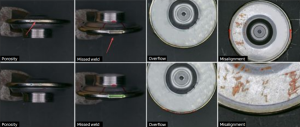
UnitX AI accurately identifies critical TIG welding defects like porosity and overflow.
Conclusion
TIG welding is an art, but inspecting it should be a science. By automating the inspection of battery electrodes, UnitX helps automotive manufacturers reduce the high error rates associated with manual checking. We ensure that the bond holding the battery together is as strong as the technology powering the car.
Struggling with weld inspection reliability?
Contact UnitX to clean up your quality control process.