Introduction: The “Point of No Return” in Seat Manufacturing
Manufacturing an automotive foam seat is a one-way process. Once the liquid chemical components are poured into the mold, they expand and cure, permanently encapsulating everything inside.
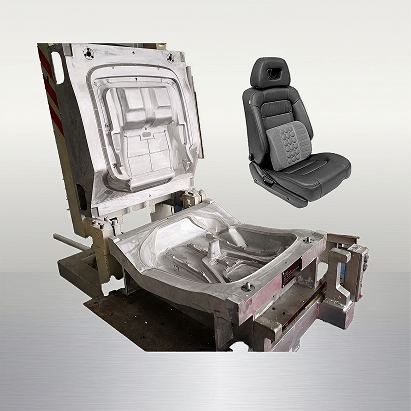
This creates a high-stakes “point of no return.” Before the pour, the mold must be dressed with various inserts—anchors, heaters, occupancy sensors, and clips—all positioned with precision. If a single component is missing or misaligned when the foam hits the mold, the entire seat is a loss. There is no disassembling it; the unit is immediate scrap.
For manufacturers, relying on manual operators to visually verify every clip and wire before every cycle is a recipe for high scrap rates. In a high-speed production environment, humans simply miss things. The solution? An automated vision system that acts as a failsafe gatekeeper.
The Challenge: Saving the Mold from the Scrap Pile
The project goal was specific: Prevent the foam pour if components are missing.
The customer was relying on manual inspection, which suffered from significant inaccuracies. If the operator missed a missing clip, the machine filled the mold, creating a defective seat that had to be thrown away. This wasted expensive foam chemicals, the embedded components, and production time.
Defect Scope:
The system needed to identify and inspect 5 specific types of components inside the complex geometry of the mold.
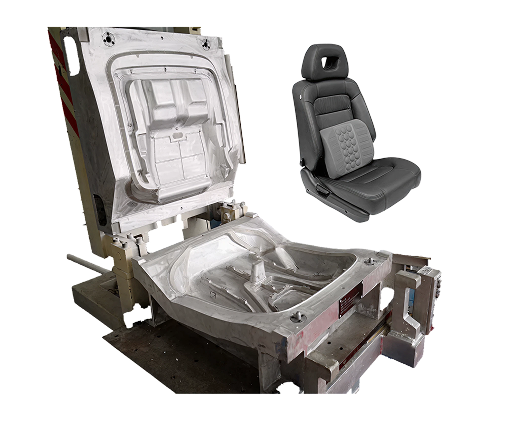
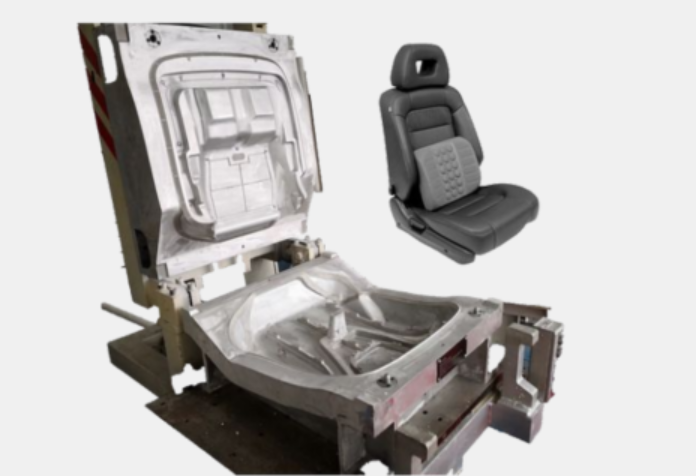
Automotive seat molds are complex assemblies. If one clip is missing before the foam pour, the final product is scrap.
The Solution: A ” Verify” AI System
UnitX deployed a smart vision solution that integrates directly into the molding line workflow.
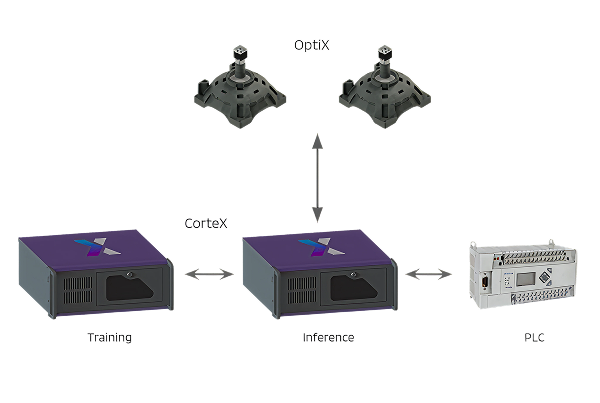
The UnitX system inspects the open mold. If components are missing, it signals the line to skip the foam fill.
How it Works:
- Image Capture: Before the foam nozzle engages, UnitX OptiX cameras capture high-resolution images of the open mold.
- AI Inspection: The CorteX AI identifies every required component (blue clips, red clips, wires) and inspects them.
- Go/No-Go Decision:
- Pass: All components present? The system signals the line to fill the mold.
- Fail: Component missing? The system blocks the fill. The mold is sent to a user rework station where an operator simply adds the missing part.
- Result: The mold is fixed, not scrapped.
Results: 100% Protection
The system turned a “scrap problem” into a “rework solution,” saving substantial material costs.
1. 100% Detection Accuracy
- False Acceptance Rate (FA): 0%.
- Validation: During the validation process across all 5 defect types, the system achieved 100% accuracy. No empty mold was allowed to be filled.
2. Low False Alarms
- False Rejection Rate (FR): ≤ 1.27%.
- The system rarely flagged a good mold as bad, ensuring the production line kept moving efficiently without unnecessary stops.
3. Rapid Integration
- Days to SAT: 5 Days.
- The solution was installed, tuned, and accepted (Site Acceptance Test) in just 5 days.
Visualization:Verifying Every Critical Detail
The AI’s ability to verify multiple small components against the intricate, reflective surfaces of a seat mold is key.In the images below, notice the text overlay: “blue_clips Expected: 14, Found: 14”. This quantitative
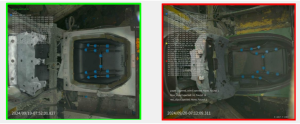
Left: A passed inspection with all 14 clips found. Right: A failed inspection flagging a missing component (Red box), preventing the pour.
Conclusion
In manufacturing, the cheapest defect is the one you catch before you add value to it. By inspecting seat molds before the foam pour, UnitX helps automotive suppliers eliminate a major source of scrap. We don’t just find defects; we prevent waste.
Stop pouring money down the drain.
Contact UnitX to safeguard your molding lines.