Introduction: The Small Part with a Big Job
In modern vehicles, Pressure Sensors are everywhere—monitoring oil, fuel, tires, and brake fluid. They are vital to both power systems and safety. Because they operate under extreme conditions, their manufacturing quality must be impeccable.
Even a slight defect—a pit on a sealing surface or a burr inside the port—can lead to leaks or incorrect readings. For our client, relying on manual inspection for these small, complex parts was a losing battle. Frequent “quality escapes” (defects reaching the end customer) were damaging their reputation, while the high labor costs of manual checking were eating into margins.
The project goal was clear: Eliminate the escapes and reduce the labor burden with a high-precision automated solution.
The Challenge: Inside, Outside, and Threads
The inspection scope for the pressure sensor casing was rigorous. The automated inspection system needed to evaluate multiple critical zones while handling a wide variety of defect types:
- Complex Exterior: Inspecting the hexagonal faces, threaded sections, and stepped surfaces.
- Critical Sealing Surfaces: Ensuring these leak-prevention zones are completely free of microscopic scuffs and scratches.
- Deep Internal Cavities: Inspecting the internal bore—a difficult area to access and illuminate using conventional machine vision.
- Nuanced Defect Classification: The system had to intelligently differentiate between true functional defects (burrs, pits, and tool marks) and non-critical cosmetic anomalies (dirt or water stains) to prevent false rejects.
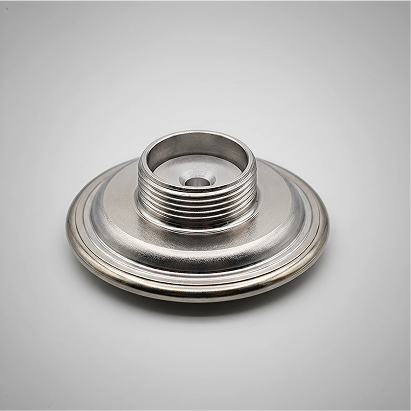
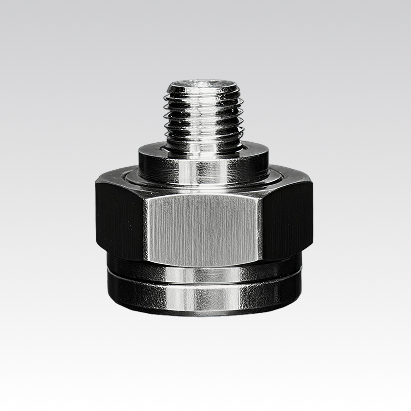
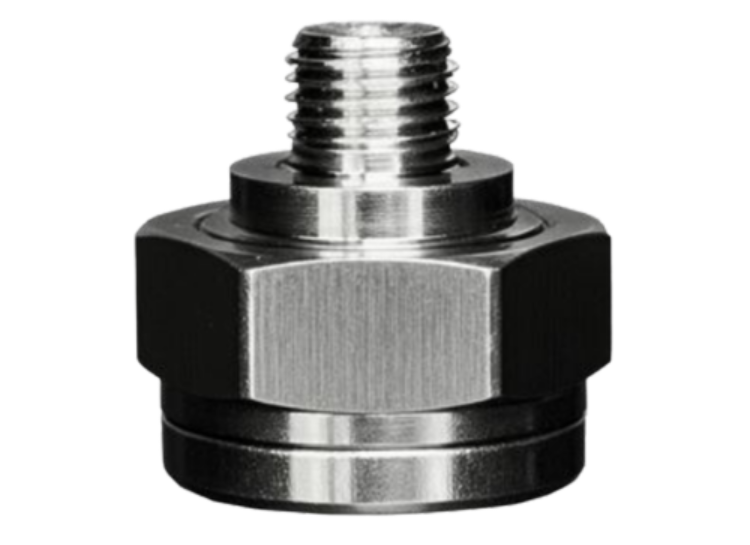
Pressure sensors require inspection of threads, sealing surfaces, and internal bores.
The Solution: 4 Workstations + 1 Endoscope
UnitX designed a rotary indexing solution that inspects the sensor from every angle.
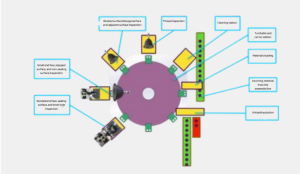
The UnitX rotary system features multiple inspection stations, including a specialized endoscope for internal views.
-
- System Capabilities:
- Comprehensive Defect Detection: Utilizes 4 UnitX OptiX vision stations for rigorous exterior inspection, paired with a custom endoscope and specialized lighting to detect defects on the inner walls of the sensor.
- High-Throughput Processing: The system inspects two pressure sensors simultaneously to maximize overall production efficiency.
- Seamless MES Integration: Automatically uploads all inspection results and statistical data directly to the MES for real-time quality tracking and management.
Results: Reducing Labor, Eliminating Escapes
The automated inspection system immediately eliminated previous quality issues while driving down operational costs:
- Labor Reduction: Replaced 5–6 manual inspectors per shift with a single automated system, drastically lowering overhead.
- Zero Escapes: Achieved a 0% False Accept Rate (FAR). Defective sensors are guaranteed to be caught before shipping.
- High Throughput (2.5 s / part): Maximized efficiency by inspecting two parts simultaneously every 5-second cycle, cutting the effective processing time to just 2.5 seconds per unit.
- Maximized Yield: Maintained a False Reject Rate (FRR) of ≤ 1%, ensuring good parts are not accidentally scrapped.
Defect Visualization
Our AI’s ability to spot defects on highly reflective, machined metal surfaces is shown below. Note the detection of “Scuff on Sealing Surface” (critical) versus “Dirt/Water Stain” (potentially cosmetic).
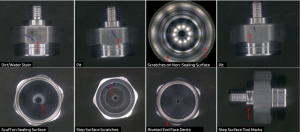
UnitX AI identifies critical sealing defects and internal flaws with high precision.
Conclusion
When it comes to automotive sensors, “manual inspection” is often synonymous with “risk.” This case study proves that by automating with UnitX, manufacturers can remove that risk entirely. We delivered a solution that not only stopped defects from escaping but also paid for itself by reducing the inspection workforce by 5-6 people.
Ready to reduce your inspection headcount?
Contact UnitX to automate your sensor production lines.