Introduction: Precision in Motion
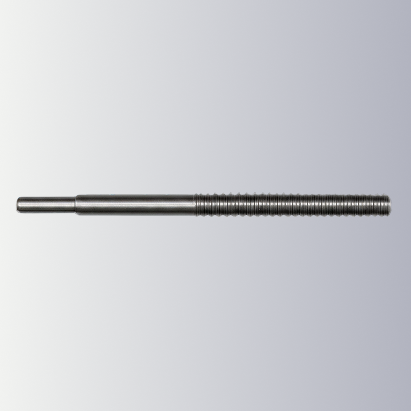
The Lead Screw is a fundamental mechanical component in any vehicle, responsible for converting rotational motion into linear motion. Whether in power seats, braking systems, or steering, the lead screw must be perfectly straight and threaded.
Defects like bending, cracks, or “bad threads” compromise functionality. They affect pitch accuracy, create stress points, and eventually lead to system failure.
However, lead screws are produced in massive volumes. For our client, the sheer scale of production made manual inspection ineffective. How do you check the microscopic thread quality of 100,000 parts every single day without slowing down the factory?
The Challenge: The Thread Nightmare
The project goal was to automate “closed-loop quality control” for a high-volume line producing diverse parts.
The Complexity:
- Thread Geometry: Inspecting threads is difficult. The system must distinguish between a functional thread, a “rough thread,” and a “missing thread.”
- Defect Variety: The system needed to catch 12+ specific defect types, including thread bulging, rust, burrs, steel wire entanglement, and surface bruising.
- Model Diversity: The line produces 3 different product models simultaneously, requiring the system to handle changeovers or mixed batches seamlessly.
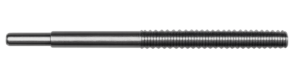
Lead screws require inspection of the entire threaded length for cracking, burrs, and machining errors.
The Solution: Parallel Processing Power
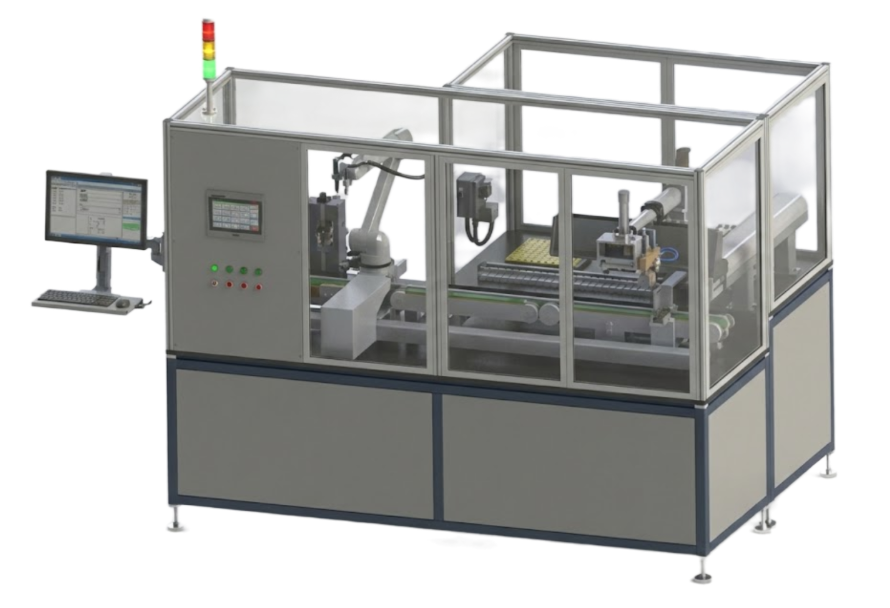
To handle the massive volume, UnitX didn’t just build a faster camera; we built a parallel processing engine.
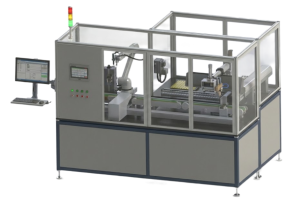
UnitX’s integrated vision system is capable of processing 21 products simultaneously.
System Capabilities:
- Simultaneous Processing: The system is designed to process 21 products simultaneously. This parallel architecture is the key to hitting the daily volume targets.
- Rotational Inspection: As the lead screws move through the station, they are rotated. The UnitX OptiX system captures the entire circumference to ensure no blind spots on the threads.
- Real-Time Tracking: Results are sent to the MES and equipment controls, ensuring that bad batches are flagged immediately.
Results: High Volume. High Precision. High Speed. High Stability.
- High Volume: 100,000 pieces per day. Enables 100% inspection of total factory output.
- High Precision: False Acceptance Rate:≤0.5%. False Rejection Rate:≤5%. UnitX solution reliably identifies “bad threads” and scratches at breakneck speeds.
- High Speed: 0.4s per piece (≤1.2s for 3 parts). Eliminates the QC bottleneck with real-time processing.
- High Stability: It manages 21-part batches across three product models simultaneously, feeding results directly to the MES for full data traceability
Defect Visualization
The AI excels at identifying thread-specific issues. In the images below, you can see how the system identifies “Bad Thread Machining” (structural error) versus a surface “Scratch.”
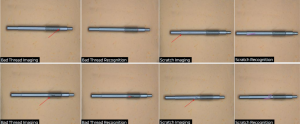
The AI model precisely highlights thread machining errors and surface scratches.
Conclusion
High-volume manufacturing often forces a trade-off between quantity and quality. This case study proves that with the right AI architecture, you can have both. By inspecting 100,000 lead screws a day with sub-second cycle times, UnitX enables automotive suppliers to scale up production without scaling up risk.
Need to inspect high-volume components?
Contact UnitX to discuss our high-throughput solutions.