Introduction: The Brain of the Transmission
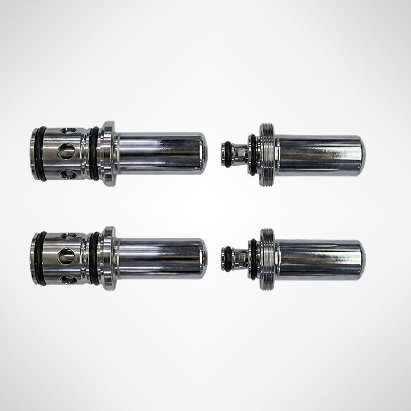
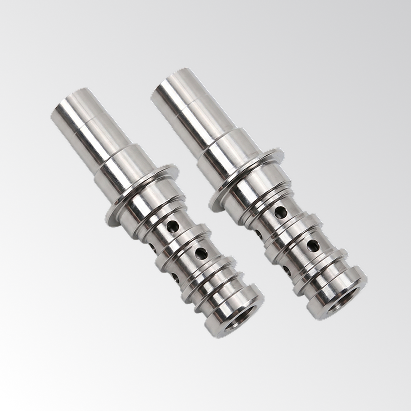
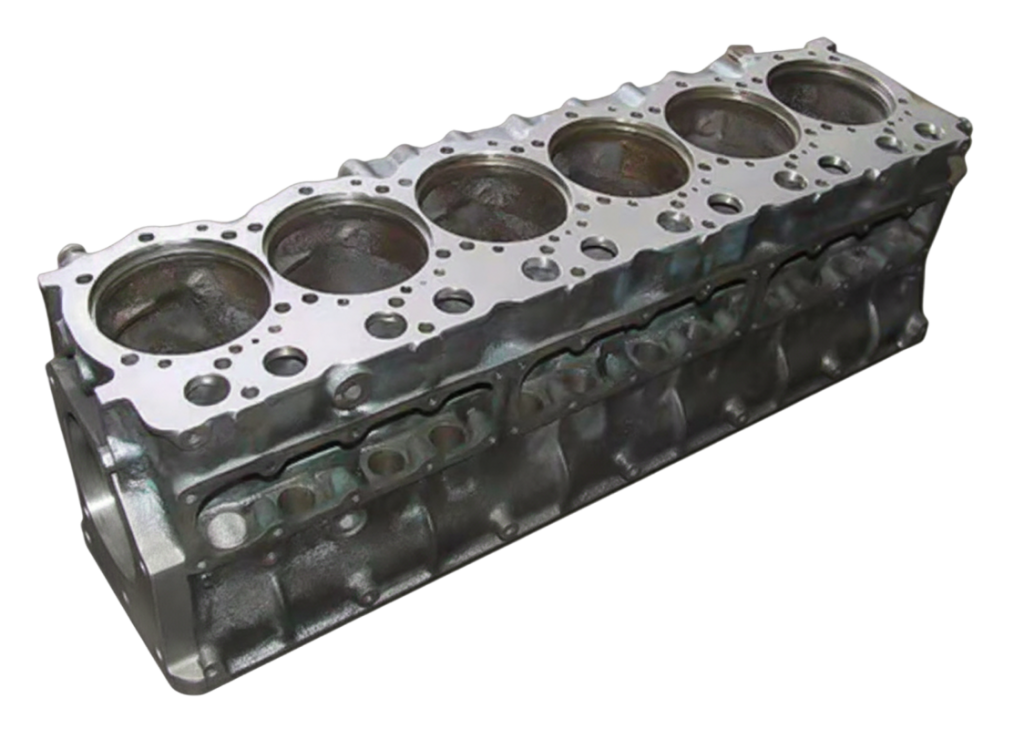
The valve body is the “brain” of an automatic transmission, routing pressurized fluid through a complex maze of machined channels to shift gears. Given its tight operating tolerances, surface precision is critical. A single defect—like a machining burr, scratch, or casting porosity—can cause valves to bind or seals to fail, resulting in harsh shifting or complete transmission failure.
Inspecting these intricate surfaces at production speeds is a massive bottleneck. Human eyes simply can’t consistently evaluate every cross-drilled bore and channel. Increasing inspection headcount to keep pace only drives up labor costs without solving the root reliability issue.
Our client needed an automated solution to eliminate this bottleneck, guarantee 100% sealing integrity, and drastically reduce manual labor.
The Challenge: Intricate Channels and Quick Changeovers
The project goal was to implement an AI Visual Inspection system capable of navigating the complex geography of the valve body.
Key Requirements:
- Complex Geometry: The system had to inspect the machined mating surfaces and critical oil channels for defects like scratches, burrs, tool marks, and casting porosity.
- Flexibility: This project required a modular workstation design and systematic quality inspection to achieve the rapid model changeovers demanded by automotive production lines.
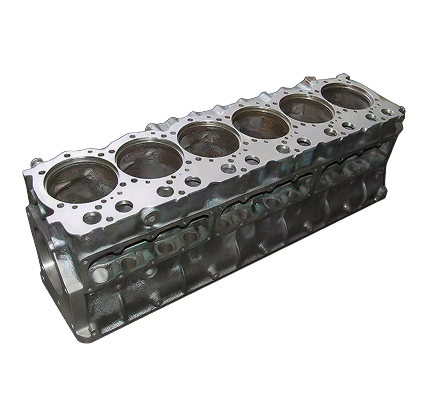
The valve body is a maze of oil channels; a single burr here can cause transmission failure.
The Solution: Robotic Fly Capture
UnitX deployed a 6-axis robotic inspection solution featuring advanced “on-the-fly” image acquisition. By continuously capturing high-resolution images as the robotic arm dynamically maneuvers the optics around the valve body, the system ensures 100% geometric coverage with zero “stop-and-shoot” delays.
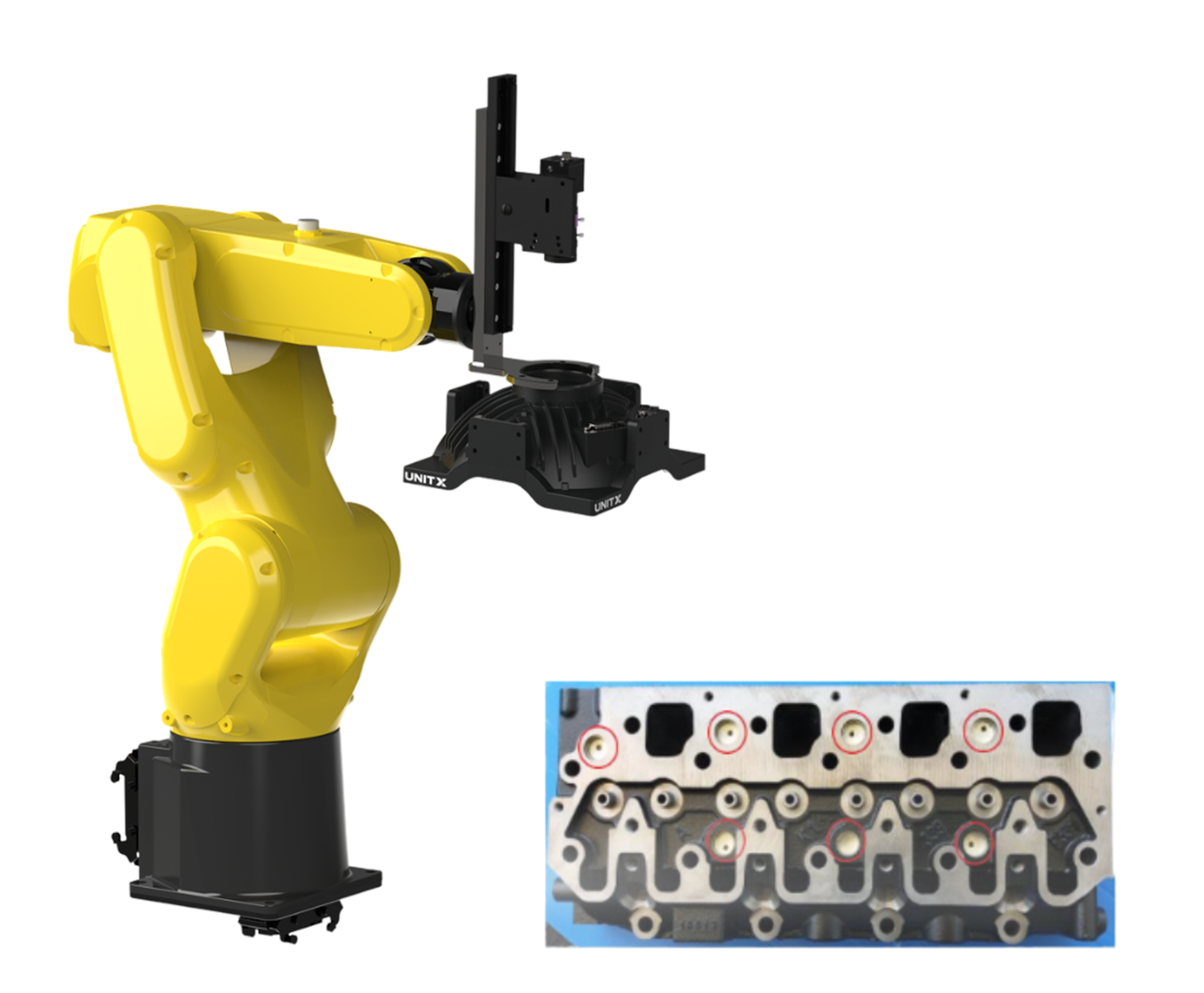
A six-axis robot with UnitX OptiX performs high-speed “fly capture” inspection over the complex surface.
How it Works:
- Dynamic Image Acquisition: A 6-axis robot integrates with UnitX OptiX to perform rapid, on-the-fly scanning across all critical machined zones of the valve body.
- AI-Driven Processing: CorteX AI instantly classifies and maps defects without slowing down the inspection cycle.
- Closed-Loop Control: The workstation automatically rejects defective units and feeds real-time quality data back to the factory equipment layer to correct production drift at the source.
Results: 5x Labor Savings
The automation project delivered massive efficiency gains, proving the robots equipped with machine vision are faster and more reliable than humans for complex visual inspection tasks
1. Massive Workforce Reduction
- Impact: Saved costs associated with 5x human inspectors
- By automating this difficult task, the client reallocated five workers per shift to higher-value roles, delivering a rapid ROI.
2. Zero Defects Passed
- False Acceptance Rate: 0%.
- The system ensured that no valve body with a critical defect (like a stuck chip or sand hole) made it into a transmission.
3. Operational Agility
- Changeover Time: ≤ 30 minutes.
- The modular design allows the line to switch between different valve body models in under half an hour, keeping machine utilization high.
- Cycle Time: ≤ 10 seconds per piece.
Defect Visualization
The AI excels at spotting surface irregularities on the machined metal. In the images below, the dark circles highlight detected pits, scratches, and porosity.
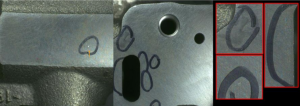
UnitX AI identifies pits and scratches on the machined surface that could compromise sealing integrity.
Conclusion
The transmission is only as reliable as its valve body. UnitX’s AI visual inspection solution ensures that these complex components are defect-free, preventing costly transmission failures down the road. With 5x labor savings and 0% false acceptance, the business case for automation is undeniable.
Ready to automate your complex machining inspection?
Contact UnitX to discuss AI Visual Inspection Solutions.